Lab-Grown vs. Natural Diamonds: What's Actually the Difference?
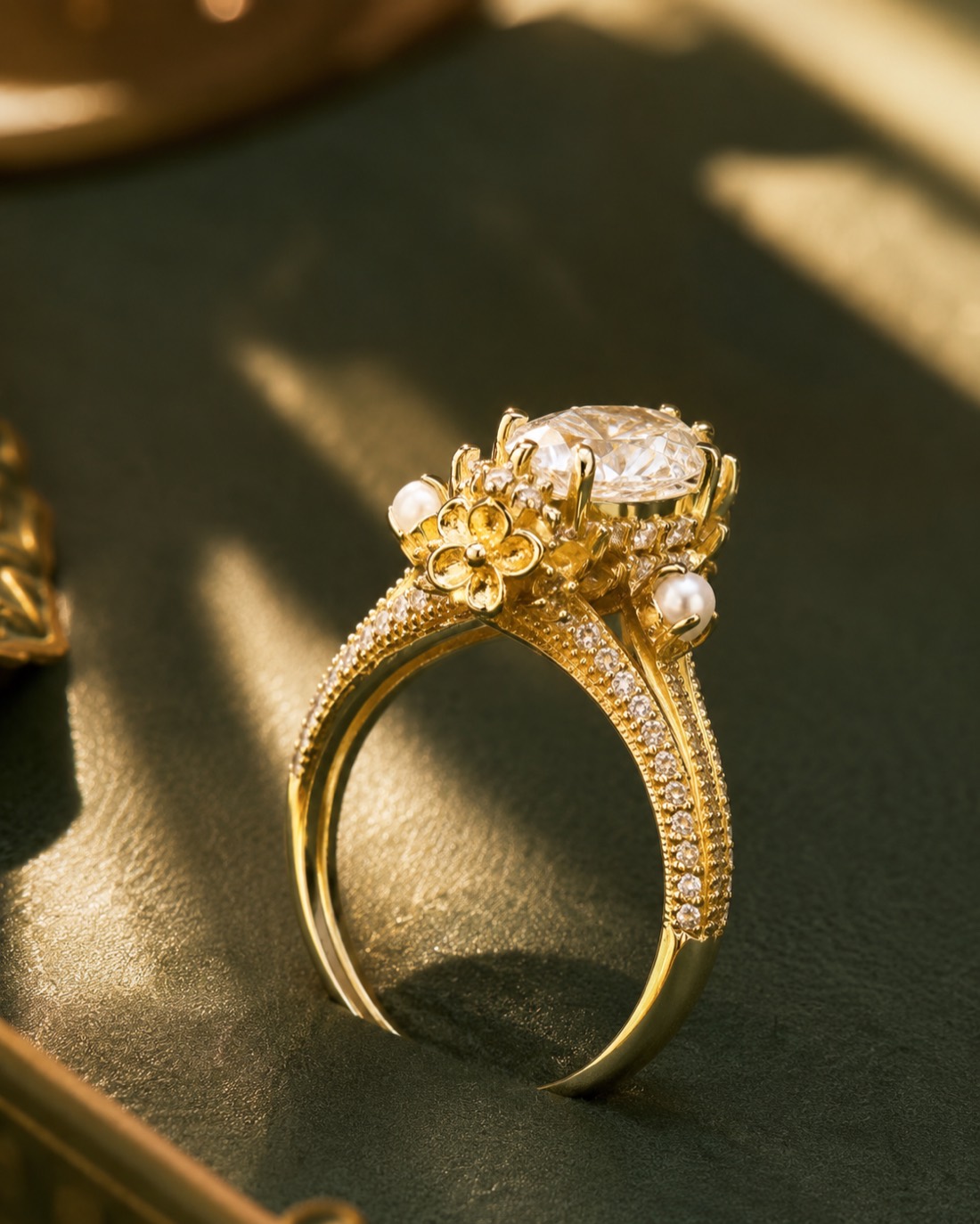
This is one piece of our full diamond education guide — start there if you want the whole picture before you buy.
Are lab-grown diamonds "real" diamonds?
Yes. This is the most common misconception, so it's worth stating plainly: a lab-grown diamond has the same crystal structure, hardness, and brilliance as a mined diamond. Gemologists need specialized equipment to tell them apart — you can't do it with the naked eye, and neither can a jeweler without lab-grade tools. The Federal Trade Commission and major gemological labs (GIA, IGI) both classify lab-grown stones as genuine diamonds, just with a required origin disclosure.
How each one is actually made
- Natural diamonds form roughly 90–120 miles below the earth's surface under extreme heat and pressure, over a timeframe measured in the billions of years, then get pushed toward the surface through volcanic activity.
- Lab-grown diamonds are created using one of two processes — HPHT (High Pressure, High Temperature) or CVD (Chemical Vapor Deposition) — that recreate those same natural conditions in a controlled setting, compressing that billion-year process into a matter of weeks.
The end result is the same crystal. The path there is different.
The price difference, explained
Lab-grown diamonds typically cost 60–85% less than a natural diamond of comparable size, cut, and clarity. That gap comes down to supply. Natural diamonds are geologically rare and controlled by a relatively small number of mining companies, which has historically kept prices — and margins — high. Lab-grown production scales more like manufacturing: as technology improves, supply increases and cost drops.
What actually matters for how a diamond looks
Regardless of origin, the "4 Cs" still determine how a diamond looks and performs:
- Cut — how well it's proportioned to reflect light (the single biggest factor in sparkle)
- Color — how close to colorless it is
- Clarity — how few internal or surface imperfections it has
- Carat — its weight/size
A well-cut lab-grown diamond will out-sparkle a poorly-cut natural diamond every time. Origin doesn't determine beauty — the 4 Cs do.
Trade-offs worth knowing about
- Resale value: Natural diamonds have historically held resale value slightly better, though both natural and lab-grown diamonds resell for well below retail price — this is true of nearly all diamonds, not a lab-grown-specific issue.
- Rarity/sentiment: Some people place emotional or symbolic value on a stone's natural, geological origin. That's a personal preference, not a quality difference.
- Size for budget: Because lab-grown diamonds cost less per carat, the same budget typically buys a noticeably larger stone.
Frequently asked questions
Can a jeweler tell a lab-grown diamond apart from a natural one just by looking?
No — not without specialized gemological equipment. Visually and chemically, they're identical.
Do lab-grown diamonds sparkle less than natural diamonds?
No. Sparkle is determined by the cut, not the origin. A well-cut lab-grown diamond can outperform a poorly-cut natural one.
Are lab-grown diamonds a good investment?
Diamonds in general — natural or lab-grown — aren't strong financial investments; both lose significant resale value compared to retail price. Buy for how it looks and what it means to you, not as an investment vehicle.
Will a lab-grown diamond be flagged on an appraisal or insurance policy?
It should be properly disclosed and certified (GIA or IGI certification exists for lab-grown stones), and insured at its actual replacement value — which is lower than a comparable natural stone.
So what does this actually mean for your ring?
Lab-grown diamonds already did something huge for engagement ring buyers: they broke the idea that a bigger, better-quality stone had to come with a natural-diamond price tag. If two diamonds are visually and chemically identical, and one costs a fraction of the other, the choice for most budget-conscious couples becomes pretty clear.
The next step after "lab-grown" — buying direct from a designer
Lab-grown diamonds solved the stone half of the pricing problem. They didn't solve the other half: retail markup. You can buy a lab-grown diamond and still pay a heavily marked-up price if you're buying it set in a ring at a traditional retail store, because the storefront, the brand, and the sales commission are still baked into the price.
That's the gap Amana was built to close. When you work with Amana, you're paying for the design and craftsmanship of your ring — not a retail markup stacked on top of an already-discounted lab-grown stone. Whether you choose a natural or lab-grown center stone, our pricing stays honest: design and craftsmanship typically runs $1,500–$4,000 (more for larger or more complex stones, and we'll always walk you through exactly why), and you leave with a real, certified diamond ring — not a rendering.
It's the same story that made lab-grown diamonds popular in the first place, just applied to the whole ring instead of just the stone: cut out the layer of cost that isn't adding value, and pass that savings straight to the couple. First it was the diamond. Now it's the whole process.
Book a free design consultation and we'll walk you through natural vs. lab-grown options side by side — with real pricing, not a sales pitch.