The First-Time Engagement Ring Buyer's Checklist
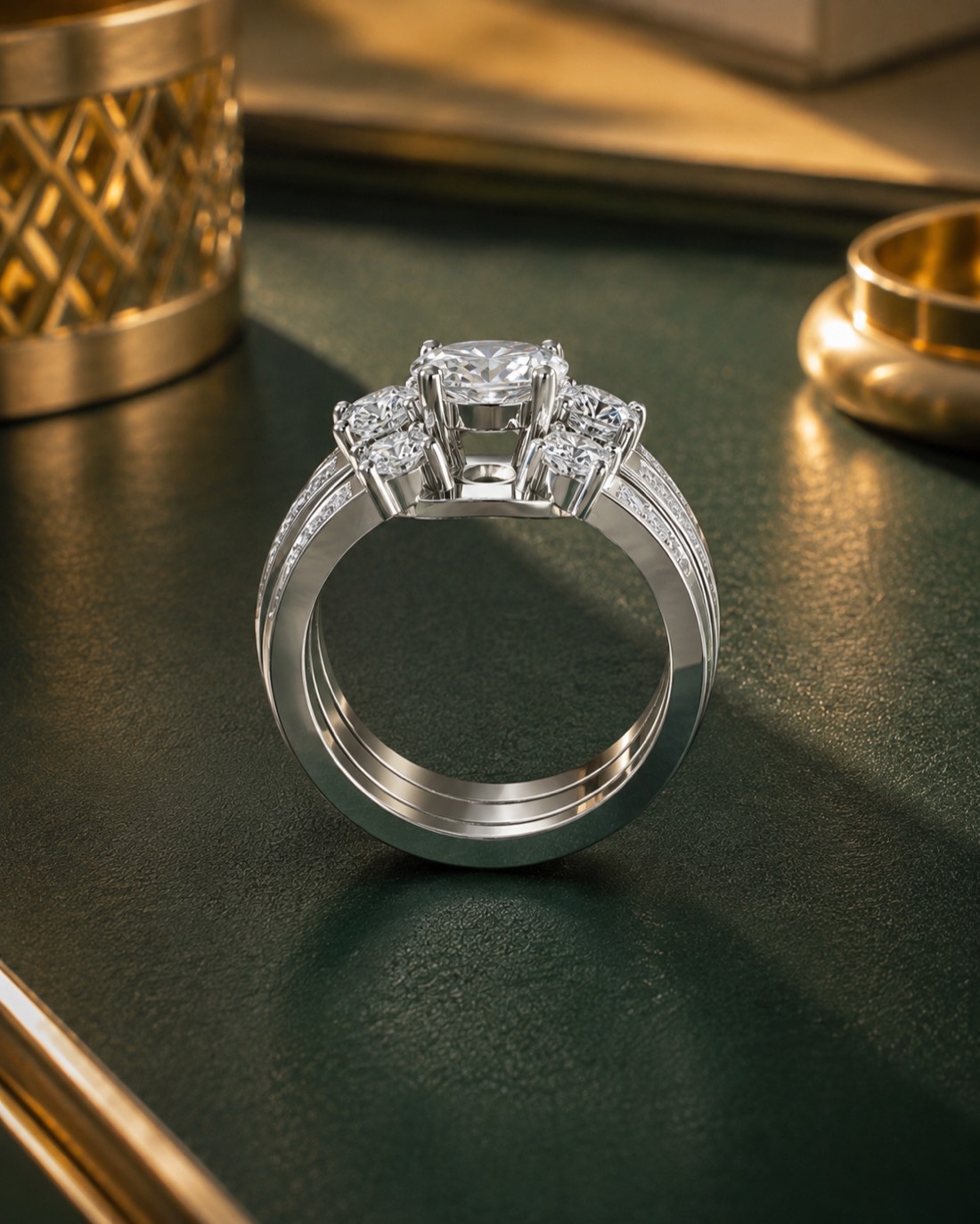
This is your starting point in our ultimate engagement ring buying guide — the checklist you run through on your own, before you talk to anybody.
Why a checklist beats "just going to look"
Walking into a store to "just look" is how most people start, and it's the single most expensive move in the process. Not because stores are villains, but because you end up making five decisions at once, in a room designed to help you decide fast, with no reference point for whether a number is good.
A checklist splits those five decisions apart and moves most of them to your couch, where they're free. By the time you're talking price with anyone, you already know what you want and roughly what it should cost. That's the whole trick.
Phase 1: The three things you do alone (weeks 1-2)
1. Set a real number, not a rule
Pick a number you can pay without touching your emergency fund or carrying a balance you'll resent. Then write down two versions: what you'd like to spend, and the ceiling you won't cross.
Ignore the "two months' salary" line. It came from a 1930s ad campaign, not from anything real. What matters is what fits your life right now — you're going to have a wedding, and possibly a move, on the other side of this. If you want to pressure-test your number, our breakdown of how much to spend on an engagement ring walks through it.
- [ ] Target number written down
- [ ] Hard ceiling written down
- [ ] Payment method decided (cash, card, financing — know the interest before you sign)
2. Learn her style like a detective, not a shopper
You're gathering evidence, not opinions. Look at:
- What she already wears. Yellow, white, or rose metal? Delicate or substantial? Does she wear rings at all?
- Her Pinterest or saved posts. The single highest-value source, and most people already have access.
- Her hands. Long fingers, short fingers, wide or narrow nail beds — this affects which shapes flatter.
- Her job and hobbies. A nurse, a rock climber, or someone in a lab needs a setting that survives real life.
- Her sister or best friend. One conversation with the right person is worth ten hours of browsing. Pick someone who can keep a secret.
Write down three words that describe what you're seeing: "simple, warm, classic" or "bold, modern, geometric." Those three words will steer every later decision.
- [ ] Metal color identified
- [ ] Three style words written down
- [ ] One trusted person consulted (optional but powerful)
3. Get her ring size
Do this early, because it takes time and because the alternatives all get worse the later you leave it. Borrow a ring she wears on the correct finger and trace the inside, or have a friend take her ring shopping "for fun." If you're stuck guessing, guess large — a ring that's too big can still slide on and be sized down later, and a ring that's too small won't go on at all on the day it matters. The whole toolkit is in how to get their ring size secretly.
- [ ] Size obtained, or a deliberate large-side guess recorded
Phase 2: The decisions about the ring itself (weeks 2-4)
4. Choose the center stone before the setting
The stone is usually the biggest line item, so it anchors everything else. Three questions settle most of it:
- Natural or lab-grown? Same material, same look, very different price per carat. Lab-grown buys noticeably more size for the same money; natural holds a scarcity story some people care about. Neither is wrong. See lab-grown vs. natural diamonds.
- What shape? Round sparkles hardest and costs the most per carat. Oval and elongated cuts look larger for their weight. Emerald and Asscher trade sparkle for clean, glassy lines.
- Where do you spend your grade budget? Cut first, always. A well-cut stone at a lower color and clarity grade outperforms a poorly cut stone with a better-looking certificate. The 4Cs, explained plainly covers the trade-offs.
- [ ] Natural vs. lab decided
- [ ] Shape shortlist of two
- [ ] Priorities set: cut first, then size, then color/clarity
5. Choose the setting
Solitaire, halo, three-stone, bezel, pavé band. This is where your three style words earn their keep. Also think about the wedding band that will sit next to it — some settings pair flat and easy, others need a contoured band later. And ask whether the design can be resized down the road, because full eternity and pavé-all-around bands often can't.
- [ ] Setting style chosen
- [ ] Band pairing considered
- [ ] Resizing question asked
Phase 3: Before money changes hands (weeks 4-6)
6. Confirm the paperwork
Two documents do two different jobs. A certificate from a lab like GIA or IGI grades the stone. An appraisal estimates replacement value for insurance. You want both, and you should never accept an appraisal as proof of quality.
- [ ] Certificate for the center stone (lab named, report number in hand)
- [ ] Appraisal for insurance
- [ ] Written itemized receipt — metal, weight, stone specs, total
7. Read the after-sale terms before you buy, not after
Return window, resizing policy, warranty coverage, and whether routine inspections are required to keep that warranty alive. Get it in writing.
- [ ] Return window confirmed in writing
- [ ] Warranty terms read, including exclusions
- [ ] Free resize window confirmed
8. Insure it before you propose
The riskiest week in a ring's life is the week you're hiding it and carrying it around. Coverage starts before the proposal, not after.
- [ ] Policy or rider active before proposal day
- [ ] Appraisal submitted to insurer
- [ ] Photos of the ring saved somewhere safe
Frequently asked questions
How long does buying an engagement ring take?
Six to eight weeks is comfortable for a custom or semi-custom ring, which leaves room for design revisions and sizing. Buying something ready-made off a shelf can happen in a day, but you're choosing from what exists rather than what fits.
What if I get the ring size wrong?
Most plain and lightly detailed bands resize easily. Full pavé bands, eternity bands, and tension settings often can't be resized at all. If you're guessing, guess large — too big is a fixable problem, too small on proposal day is not.
Do I need a diamond certificate for a small stone?
For center stones, yes — it's the only independent record of what you bought. Tiny accent stones are typically not certified individually, which is normal and not a red flag.
Is it bad to buy the ring before knowing her exact size?
No. Plenty of people propose with a ring sized on a best guess and adjust after. Just make sure the design can be resized and that the seller's policy covers it.
Should I bring someone with me?
One person, if they know her taste and can keep quiet. More than that and you're managing a committee instead of buying a ring.
So where does this leave you?
Run the list and something becomes obvious: almost every expensive mistake in ring buying happens because a first-time buyer made a decision under pressure, without enough information, in a room where someone else knew a lot more than they did.
The fixes are all upstream. Know your number before you hear a price. Know her style before you see a case. Know her size before you're on one knee. And know what the paperwork means before you sign it. Do those four things and the actual purchase becomes the easy part.
Which leaves one question the checklist can't answer for you: who do you want on the other side of the table?
Why designing the ring makes this checklist easier
We're Amana Engagement, and we design custom rings, so we're not a neutral voice here. But here's the honest case.
Most of the risk on this list comes from deciding blind. When you design the ring, you don't. In your consultation we build the concept with you on the spot using AI-assisted visuals, so you see her style translated into an actual ring before anything is made. About three days later you get a CAD file — a precise 3D model of the exact ring. If something's off, you say so and we revise. Revisions are normal, usually small, and they repeat until you approve. Then you pay the balance through an emailed link and the ring is ready about two weeks later.
On price: a comparable ring at a traditional retail jeweler runs around $12,000. Buying that same finished ring wholesale still runs around $8,000. We charge for the design and the craftsmanship — typically $1,500 to $4,000 — and you still get a real, certified diamond ring. Larger or rarer stones and more complex builds can run higher, and if yours will, we explain exactly why before you commit to anything.
Our name means "trust" in Arabic, and the order matters to us: earn your trust, make your ring.