Red Flags When Ring Shopping
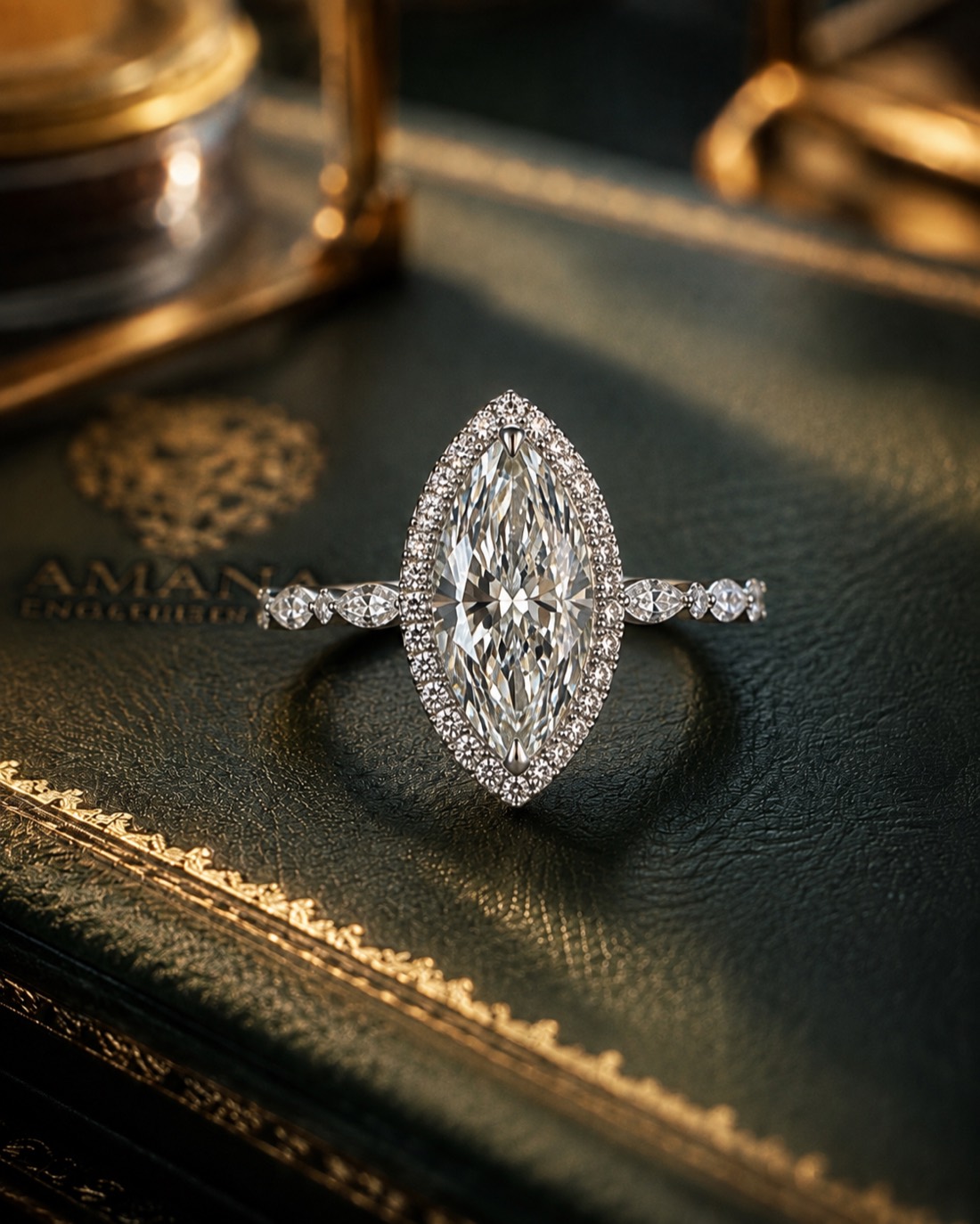
This is part of our full guide to why custom doesn't cost more.
How this differs from watching your money
Elsewhere we cover the charges that get added to a quote and the anatomy of what you're paying for. This is a different lens: not what does it cost, but can I trust the person telling me.
That distinction matters because the tactics below can appear at any price point. An expensive ring from a pressure seller is a bad purchase. A cheap one with no certificate is also a bad purchase. Trustworthiness is its own axis.
Red flag 1: The deal that expires
"This price is only good today." "I can do this for you but I'd have to get it approved, and my manager leaves at six." "There's another couple looking at this stone."
Artificial urgency exists for exactly one reason: to prevent you from comparing. A real price is a real price tomorrow. If a discount evaporates the moment you leave to think, the discount was never the point — your inability to shop around was.
The response is simple and it works: "Then I'll pass, thanks." Watch what happens to the deadline.
Red flag 2: In-house grading reports
A grading report is only as credible as the lab's independence. GIA and IGI are independent third parties with no stake in the sale.
Some sellers present reports produced by their own in-house lab, or by labs with a reputation for looser grading, formatted to look official. A stone graded two color grades and a clarity grade more generously than an independent lab would grade it can be advertised as a bargain while being priced exactly right for what it actually is.
What to check: the name of the lab on the report, and whether it's a lab you can independently verify. Most major labs let you look up a report number on their own site. Do that, on your own phone, standing right there. Our diamond certification guide covers which labs mean what.
Red flag 3: The appraisal that's double what you paid
"It's a $10,000 ring, but you're getting it for $4,500 — here's the appraisal."
An insurance appraisal is supposed to estimate replacement cost, not flatter you. When an appraisal comes in dramatically above the purchase price, one of two things is true: the appraisal is inflated, or you got an implausible deal. The first is far more common.
Inflated appraisals have real costs. You may insure at an unrealistic value and pay premiums accordingly, and you carry around a belief about your ring's worth that a second opinion would dismantle. The appraisal is also frequently produced by someone connected to the seller.
An appraisal and an independent grading report are different documents doing different jobs — our diamond certification guide covers which one actually verifies what you bought.
Red flag 4: Nothing in writing
Ask for a written, itemized quote — stone specs, metal, setting, all fees, timeline. Anyone operating straightforwardly can produce this in a few minutes.
Resistance to writing things down is the most reliable red flag on this list, because it's the one that has no innocent explanation. Verbal promises about sizing, upgrades, warranties, and timelines are worth exactly nothing when there's a disagreement six months later.
Also: get the specific stone on the invoice, not a description. Carat weight, shape, color, clarity, cut grade, and the lab report number. Which leads directly to the next one.
Red flag 5: Bait and switch on the stone
You picked a stone with a specific report number. What arrives is "the same specs" but a different stone.
Two stones with identical paper specs can look noticeably different, because the report doesn't capture everything — inclusion placement, how the stone actually performs in light, subtle color. The report number is the identity. Insist it appears on your invoice and check it on the finished ring's documentation.
Red flag 6: Vague answers to direct questions
Try these and pay attention to the shape of the answer, not just the content:
- "What's the cut grade on this stone?"
- "Is this price with the stone set?"
- "What's your policy if it needs resizing in six months?"
- "What lab graded this, and can I look up the report?"
Every one has a factual answer. If you get redirected to how beautiful the ring is, how much she'll love it, or how the payment plan works — you asked a question and got a sales technique. That's information.
Red flag 7: Discouraging you from comparing
Confident sellers expect you to look elsewhere. Some of them will tell you what to compare.
The opposite behavior — discouraging comparison, disparaging every alternative reflexively, implying that shopping around means you don't care about her — is a tell. So is refusing to let you photograph the specs or take the quote home.
Red flag 8: Pressure aimed at emotion rather than the ring
"She'll be able to tell if you cheaped out." "This is the one thing you can't get wrong."
Anything that works by making you anxious rather than informed is a tactic. A good conversation about an engagement ring should leave you calmer than you started, not less sure of yourself.
Red flag 9: No clarity on who's actually making the ring
Especially with custom work. Who's designing it? Who's setting the stones — in house, or shipped out? What happens if the finished ring doesn't match the design you approved?
Vagueness here often means the work is being brokered through several parties, each adding cost and each able to point at the others when something goes wrong.
The short version of due diligence
- Get the written itemized quote with the lab report number on it.
- Verify the report on the lab's own website, yourself.
- Ask what the out-the-door total is and what isn't included.
- Leave. Sleep on it. See whether the price is still the price.
- Compare against at least one other seller on identical specs.
That's it. Five steps, no expertise required, and it filters out essentially everything on this page.
Frequently asked questions
Are chain and mall jewelers a red flag by themselves?
No. Plenty of them operate straightforwardly. What varies is pricing structure and sales culture — commission-driven floors tend to produce more of the pressure behavior above. Judge the individual seller by the checklist, not by the sign on the door.
What if a stone has no certificate at all?
For melee accent stones, that's normal. For a center stone at any meaningful size, it's not — you're being asked to accept the seller's own word about grades that drive most of the price. Independent verification is the entire point.
Is a very low price automatically suspicious?
Not automatically, but it should prompt a specs check. Usually the answer is legitimate — a lab-grown stone, a lower cut grade, a slightly warmer color, a fluorescence discount. Sometimes the answer is that the paper doesn't match the stone. Look before assuming either.
Can I bring a stone to an independent appraiser before buying?
Sometimes, depending on the seller's policy, and a willingness to allow it is itself a good sign. At minimum, you can verify the lab report number independently in seconds.
What's the single strongest signal a seller is trustworthy?
They answer direct questions directly, and they put numbers in writing without being pushed twice.
So where does this leave you?
Almost none of this is about detecting fraud. It's about noticing when a conversation stops being informative and starts being managed.
The good news is that every red flag here is visible to a complete beginner. You don't need to grade a diamond to notice that a question got dodged, or that a discount has a deadline, or that nobody will email you the numbers. Those are behaviors, and behaviors are readable.
Trust your read. If you leave an appointment feeling more anxious and less clear than when you walked in, that's data.
Trust first, ring second
Amana means "trust" in Arabic. That's not a marketing line we reverse-engineered — it's the name, and it's the order we work in: earn your trust, then make your ring.
Practically, that looks like this. We're designers, not a store. You pay for the design and the craftsmanship — typically $1,500 to $4,000 — and you still walk away with a real, certified diamond ring. If your stone is larger or rarer, or the design is genuinely complex, it can run higher, and we say so in the meeting with the reason, before you commit to anything. Nothing about the number arrives late.
For scale: the same ring at a traditional retail jeweler is around $12,000. Bought wholesale, that identical finished ring still runs about $8,000. Natural diamonds brought the price down once, lab-grown brought it down again, and designer-direct is the third era.
The process has no room for pressure in it. You meet with us in person or virtually, and we design the concept together in that meeting using AI-assisted visuals — so you're looking at your ring, not being talked at about it. Your CAD file comes about three days later, on your own time. You approve it and pay the balance through a link we email you. Ring ready roughly two weeks after that. If the CAD isn't right, we revise it until it is.
No deadline on the price. No manager leaving at six.