GIA vs. IGI vs. Everyone Else
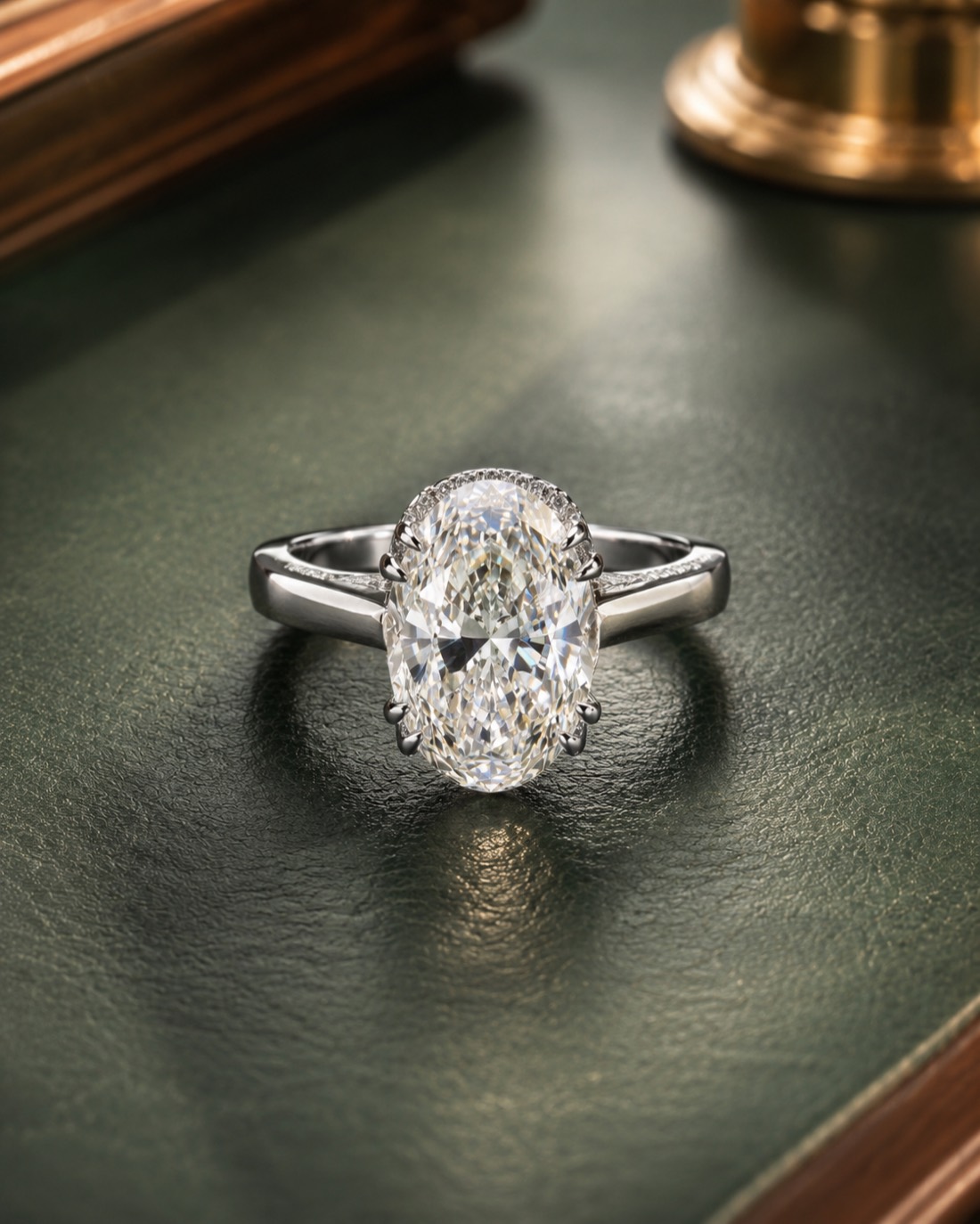
This is one piece of our full diamond education guide.
What a report actually is
A grading report documents a diamond's measurements, weight, proportions, cut/polish/symmetry, color, clarity, fluorescence, and — for lab-grown — its growth method. Many stones also carry a laser inscription on the girdle matching the report number, so you can verify that the paper belongs to the stone.
What a report is not: a valuation. It doesn't say what the diamond is worth. That's an appraisal, which is a different document written for a different purpose (usually insurance) and often by someone with a stake in the number. The difference between the two trips up a lot of buyers — we break it down in appraisal vs. certification.
A report is also, fundamentally, an opinion — a trained, standardized, repeatable opinion, but an opinion. Which is exactly why the name on the letterhead matters.
GIA
The Gemological Institute of America is the nonprofit that created the 4Cs and the D-to-Z color scale the entire industry uses. It's the reference point everyone else is measured against.
Strengths: the tightest and most consistent grading in the business, and the most trusted resale-wide. Two GIA stones with the same grades are genuinely comparable. GIA is also the only lab that assigns a full cut grade, and only to round brilliants.
Notes: GIA grades lab-grown diamonds too, and now issues them on the same standard scale. Their reports cost more and take longer, so lower-value stones often aren't sent there.
If you're buying a natural diamond of any real size, GIA is the default answer.
IGI
The International Gemological Institute is a large global lab that grades an enormous share of the world's lab-grown diamonds — most lab-grown stones you'll encounter carry an IGI report.
Strengths: consistent within its own standard, fast, affordable, and the practical default for lab-grown. For lab diamonds specifically, an IGI report is a normal and reasonable thing to buy on.
Notes: IGI has historically graded slightly more generously than GIA on color and clarity — often described as about one grade in each category, though it varies. That's not fraud; it's a different calibration point. It matters when you're comparing prices, because an IGI G VS1 and a GIA G VS1 aren't guaranteed to be the same stone quality, so a price gap between them may not be the bargain it looks like.
Compare like with like: IGI to IGI, GIA to GIA.
AGS
The American Gem Society Laboratories built its reputation on cut science, using a 0-to-10 scale where 0 is Ideal. Its light-performance analysis was the most rigorous cut assessment available for years. AGS was acquired by GIA in 2022, so new AGS reports have largely wound down, but existing ones still carry real weight — an AGS 0 cut is a genuinely excellent stone.
EGL and the softer labs
EGL (in its various regional entities) and a number of smaller labs grade noticeably looser. The commonly cited gap is roughly two grades in color and clarity versus GIA, sometimes more.
Here's the practical consequence. A stone GIA would call I SI2 might come back from a softer lab as G VS2. Nothing has changed about the diamond. But it's now being sold as a G VS2 — at a price that looks like a fantastic deal against real G VS2 stones, because the buyer is comparing the grade, not the diamond.
That's the mechanism behind most "how is this so much cheaper?" listings. The discount is real. So is the reason for it.
In-house "certificates"
Some sellers provide their own document, sometimes on impressive paper with a gold seal, sometimes titled "Certificate of Authenticity."
A grading report's entire value comes from being written by a party with no stake in the sale. When the seller writes the grades, there's no independence, and there's nothing to compare it against. It's not necessarily wrong. It's just unverifiable, which for your purposes is the same thing.
If a stone of meaningful value has no independent report, that's information.
How to actually verify
Three steps, none of them hard:
- Look up the report number on the lab's own website. GIA, IGI, and AGS all have free public report lookup. Confirm the grades on the screen match the paper you were handed.
- Check the inscription. Most modern reports list a laser inscription on the girdle. A jeweler can show it to you under magnification. That's how you know the paper matches this stone.
- Match the measurements. The report lists exact millimeter dimensions and weight. They should match the stone in front of you.
Any seller should be completely relaxed about all three.
Does the lab change what the stone looks like?
No — and it's worth saying, because it cuts both ways. A beautiful diamond is beautiful regardless of which lab graded it. If you look at a stone and love it, the letterhead didn't change it.
What the lab changes is your ability to compare and to know what you're paying for. Grading exists so you can shop stones you haven't seen side by side and price them fairly. A loose lab doesn't make a diamond worse; it makes the price meaningless.
Frequently asked questions
Is GIA better than IGI?
GIA grades more strictly and consistently, and it's the stronger benchmark for natural diamonds. IGI is the practical standard for lab-grown and is reliable there. The key is not mixing them when comparing prices.
Is an IGI certified diamond worth buying?
Yes, particularly for lab-grown, where IGI grades the large majority of stones. Just compare IGI stones to other IGI stones, since its color and clarity calibration has historically run about a grade softer than GIA's.
Why is this diamond so much cheaper with the same grades?
Usually because the grades came from a softer lab. A stone graded G VS2 by a lenient lab might be I SI2 by GIA standards — the price reflects the actual stone, not the printed grade.
What's the difference between a diamond certificate and an appraisal?
A grading report describes the diamond's characteristics objectively. An appraisal assigns a dollar value, typically for insurance, and inflated appraisals are common. They answer different questions.
Do lab-grown diamonds come with certificates?
Yes. Both IGI and GIA grade lab-grown diamonds on the standard 4C scale, and the report also identifies the growth method (HPHT or CVD). Reputable lab-grown stones are graded and laser-inscribed as such.
So where does this leave you?
Buy a stone with an independent report from GIA or IGI, verify the number online, check the inscription, and compare only within the same lab. That's the entire defense, and it costs you nothing but a few minutes.
Notice what this one has in common with everything else in diamond education, though. It's a fact that protects your money, it takes about ninety seconds to explain, and it's almost never explained. Softer grading only works on someone who doesn't know grading softens.
Where we sit in that
Amana designs rings — we're not a store with a case of graded stock to move. Nobody here works on commission, so there's no version of this where we're better off if you don't check the report number. We'll hand you the report and the lookup page.
The money, plainly. A comparable ring at a traditional retail jeweler runs about $12,000. That same finished ring bought wholesale is still around $8,000. Our design and craftsmanship typically run $1,500–$4,000, and you still get a real, independently certified diamond in a ring built from your design. Larger stones, or rarer and more complex ones, can run higher — and we'll explain exactly why before you commit.
Natural diamonds set the price. Lab-grown brought it down. Designer-direct is the third era of that same story.
The process: design together, in person or over video, with AI-assisted visuals. CAD file about three days later. You approve and pay the balance through an emailed link. Ring's ready roughly two weeks after that.
Earn your trust. Make your ring.