What Can You Get for a $2,000 Engagement Ring?
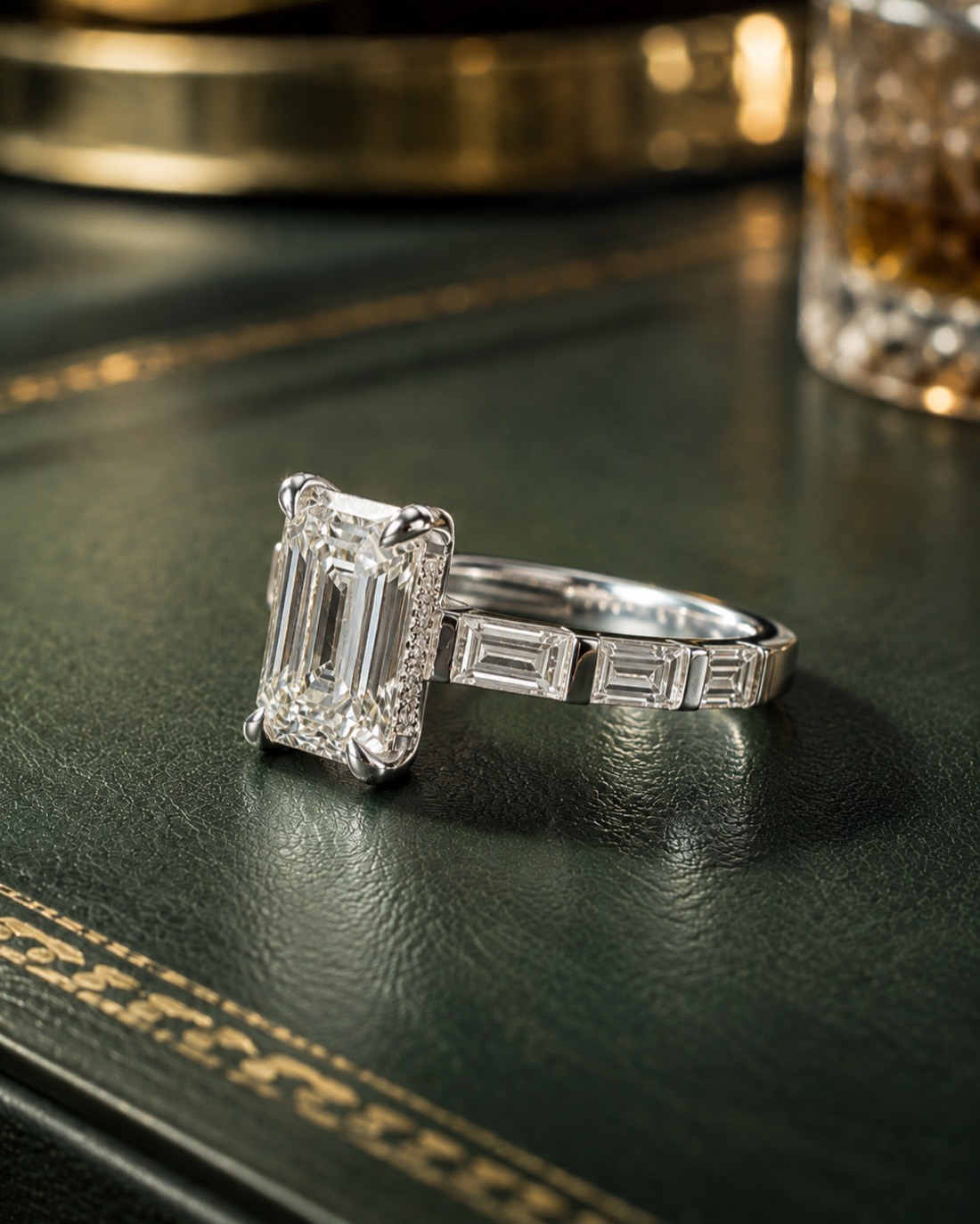
What actually shifts at a $2,000 budget
Two thousand dollars sits in a very workable range for a real, well-made engagement ring — it's not a "starter" budget, it's a legitimate one. What changes as you move through this range is mostly:
- Diamond size. A well-cut natural diamond around a third to three-quarters of a carat is typical here, depending on shape (elongated shapes like oval and pear tend to look larger per carat than round).
- Diamond origin. Lab-grown diamonds are chemically and optically identical to natural diamonds but generally cost significantly less per carat, so $2,000 stretches further if you're open to one.
- Metal purity and type. 14k gold is common at this price; 18k and platinum both cost more per gram and typically push a ring above this budget unless the stone is smaller.
- Clarity and color grade. Near the top of most grading scales (flawless, colorless) costs a real premium that isn't visible to the naked eye for most people. A well-chosen "eye-clean" stone a few grades down looks the same to almost everyone.
Natural vs. lab-grown at this budget
This is the single biggest lever at $2,000. A natural diamond and a lab-grown diamond of the same size, cut, and clarity look identical under normal viewing conditions — the difference is where the carbon came from and how it formed. Because lab-grown diamonds cost meaningfully less per carat, choosing one typically means:
- A noticeably larger stone for the same money, or
- The same size stone with a higher clarity/color grade, or
- The same stone with money left over for a nicer setting or metal
There's no wrong answer here — it's a genuine trade-off between origin and size, and it's worth deciding on purpose rather than by accident.
Setting style matters more than people expect
At $2,000, the setting style can do a lot of visual work. A halo setting (small diamonds surrounding the center stone) makes the center stone look larger and adds overall sparkle without needing a bigger center diamond. A well-proportioned solitaire, on the other hand, puts all the visual weight on the center stone itself. Neither is "better" — it's a style and priority call.
What to actually check before buying at this price
- Ask for the certification. A legitimate grading report (from a lab like GIA or IGI) tells you exactly what you're paying for.
- See it in person or on video before committing, if possible — photos can make color and clarity hard to judge accurately.
- Ask what's included in the $2,000 — is that the total price, or does resizing, insurance, or engraving cost extra?
- Compare cost per carat across shapes — round diamonds typically cost more per carat than fancy shapes like oval, pear, or cushion, because more of the rough stone is wasted in cutting a round.
Frequently asked questions
Is $2,000 enough for a "real" engagement ring?
Yes. It's a legitimate budget that gets you a genuine diamond (natural or lab-grown) in a well-made setting. It's simply a different set of trade-offs than a $5,000 or $10,000 budget, not a lesser ring.
Should I choose a smaller natural diamond or a bigger lab-grown one at this price?
That's a personal preference, not a right-or-wrong choice. Some people prioritize natural origin; others prioritize size and sparkle for the money. Both are completely valid.
What carat size is typical for $2,000?
It varies by shape, cut quality, and whether the diamond is natural or lab-grown, but roughly a third to three-quarters of a carat is common for natural stones in this range.
Does the setting cost eat into the diamond budget?
Yes — metal type, prong style, and any accent stones all come out of the total. A simpler setting leaves more of the budget for the center stone, and vice versa.
So where does this leave you?
A $2,000 budget is workable and honest — the goal is just making sure you know exactly where your money is going: the stone, the metal, or the design. That's a conversation, not a guessing game.
Where a designer-direct ring fits into a $2,000 budget
Amana's design-plus-craftsmanship model runs roughly $1,500–$4,000 total for most projects, which puts a $2,000 budget comfortably in range for a custom-designed ring rather than a pre-made setting off a shelf. The difference from a retail store is what you're paying for: instead of covering a big retail markup (comparable rings often run around $12,000 at retail, or around $8,000 buying a finished ring from a jeweler), you're paying for the design and craftsmanship directly. Larger or more complex stones can run past this range, and that's discussed honestly upfront rather than after the fact.
Every ring is designed around a real conversation about your specific budget, not assembled from a catalog — see how designer-direct pricing compares to retail for the fuller breakdown. If a $2,000 ring is where you're starting, reach out and we'll walk through what that actually gets you.