How to Negotiate an Engagement Ring Price
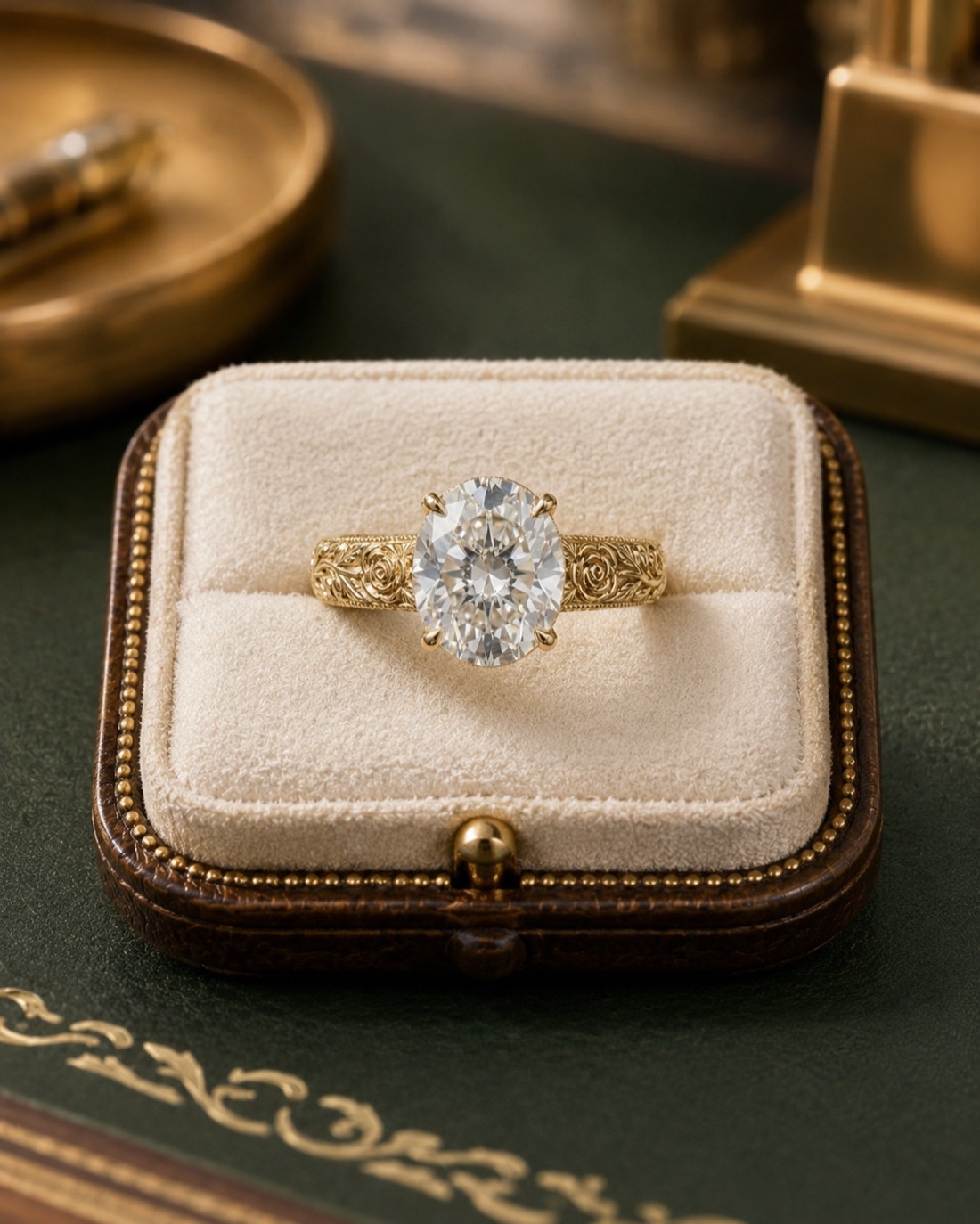
This is part of our full guide to why custom doesn't cost more.
What negotiating actually tells you
Before technique, the most important idea in this article.
If a seller can knock 30% off on the spot, the price was 30% too high a minute ago. That's not a deal — it's a disclosure. Everyone before you who didn't ask paid it.
Big discount room means high margin, which usually means high overhead. Little discount room can mean either thin margin (good) or firm policy (neutral). So negotiate, absolutely — but read the answer as information about the business, not just as money saved.
What's genuinely negotiable
The loose center stone. This is where most of the room is, because it's the largest line item and because dealer pricing on stones varies. If a seller has the stone in stock and it's been sitting, there's often flexibility.
The setting. Less room, but some — especially on an in-stock mounting.
Bundled extras. Frequently the easiest win. Free sizing, free appraisal, waived setting fee, first replating included, an upgraded warranty, a wedding band discount. Sellers protect the headline price and give ground here, because it costs them less. Take it — these are real dollars. See our hidden fees guide for the full list of what to ask to have included.
Payment method. Some sellers discount for cash, debit, or wire, since card processing costs them 2-3%. Worth asking directly.
Floor models and end-of-line stock. A mounting that's been displayed can often be had for less.
What's usually not negotiable
Custom or made-to-order work at a designer. There's no inventory to clear and no markdown pool, so the price tends to be closer to the actual cost of doing the work. That's a feature — less spread means less game — but it also means less room.
Genuine dealer-level pricing. If you're already close to cost, there's nothing to give.
Certified stone pricing at transparent sellers. Online retailers with published, thin margins generally don't move.
The approach that actually works
Forget the theatrics. Here's the sequence.
1. Make the quote comparable
Ask for it written and itemized: stone specs including the lab report number, metal and karat, accent stones, setting labor, and every fee. This alone changes the conversation, because it converts a single number into components you can question individually.
2. Get a second quote on identical specs
Not "a similar ring" — the same shape, exact carat weight, cut grade, color, clarity, lab, and metal. This is the leverage. Everything else is asking nicely.
If you're not sure what to hold constant, our 4Cs guide covers the variables.
3. Negotiate on specs before price
This is the underused move, and it's usually worth more than a discount.
Rather than "can you do better," try: "This stone is 1.02 carats. What do you have between 0.90 and 0.98 with the same cut and color?" You're not asking for a favor. You're asking to move down the price curve, and the saving is often larger than any discount they'd offer. Same with clarity — moving from VVS to an eye-clean VS2 saves real money and changes nothing you can see. More on why in does a bigger diamond always cost more.
4. Ask for inclusions, not just dollars
"Can you include sizing, the appraisal, and setting in that number?" is a much easier yes than a price cut, and it can be worth several hundred dollars.
5. Be willing to leave
Genuinely willing, not performatively. The best prices tend to arrive after you've said you want to think about it. And if the price gets better only when you head for the door, you've learned what the price actually was.
The questions that do the work
- "Can you break that into the stone, the setting, and your fee?"
- "Is that the out-the-door total? What isn't included?"
- "What's your best price if I pay by debit or wire?"
- "Do you have anything in the same specs just under the round carat weight?"
- "Would you include sizing and the appraisal at that price?"
- "How long has this stone been in your inventory?"
That last one is quietly useful. A stone that's been sitting is a stone with room in it.
More along these lines in questions to ask a jeweler.
What not to do
Don't lowball aggressively. It doesn't work in a relationship-based business and it ends the conversation.
Don't negotiate before you understand the specs. You can't tell a good price from a bad one until you know what you're pricing. Do the homework first.
Don't let a discount change what you buy. "I'll give you 20% off this one" on a ring you didn't want is not a saving. It's a redirect toward inventory they need to move.
Don't accept a spec downgrade disguised as a discount. If the price came down because the stone changed, that's not a negotiation — it's a different product. Check the report number.
Don't negotiate under a deadline. If the offer expires today, that's a pressure tactic, and it belongs on our red flags list rather than in your decision.
Frequently asked questions
Can you negotiate at chain and mall jewelers?
Often yes, particularly on loose stones and during sale periods. The floor staff may need manager approval. Bundled extras are usually the easiest concession to get.
Is it rude to negotiate on an engagement ring?
No. It's a large purchase in a category with historically wide margins, and every seller has been asked before. Ask straightforwardly and without theatrics.
How much of a discount is realistic?
There's no universal figure, and the honest framing is that the size of the available discount says more about the original markup than about your skill. A transparent, low-margin seller may have almost no room and still be the better price.
Should I mention a competitor's quote?
Yes, if it's real and on identical specs. Bring the written quote. Vague claims about a better price elsewhere don't move anyone.
Is a huge discount a good sign?
Usually not. It means the original price contained a lot of air. Prefer a seller whose first number is defensible over one whose fourth number is.
So where does this leave you?
Negotiating works, and it's worth doing. But it's a way of recovering margin from a price that had margin built in — which means the best outcome from negotiating is landing where a lower-overhead seller started.
The more durable move is upstream. Understand the specs, get the quote itemized, compare across channels, and buy from a model that doesn't need a big spread in the first place. Then you're not negotiating, you're just comparing — and that's a much better position.
When there's nothing to negotiate
Here's what we'll say plainly: there isn't much room to haggle with us, and that's because of how we're set up rather than a policy.
We're designers, not a store. No case, no inventory, no stock that's been sitting since spring and needs a discount to move. What you pay for is the design and the craftsmanship — typically $1,500 to $4,000 — and you still walk away with a real, certified diamond ring. If your stone is larger or rarer, or the design is genuinely complex, it can run higher, and we tell you that in the meeting with the reason, before you commit.
For scale on what the spread looks like elsewhere: the same ring at a traditional retail jeweler runs around $12,000. That identical finished ring bought wholesale still runs about $8,000. That gap is what negotiating is fishing in. Natural diamonds brought prices down, lab-grown brought them down again, and designer-direct is the third era — where the price starts closer to what the ring actually costs to design and make.
Our process: consultation in person or virtually, designing the concept together in the meeting with AI-assisted visuals so you can see it. CAD file about three days later. You approve it and pay the balance through a link we email you. Ring ready roughly two weeks after that. Nobody's going to check with a manager, and no price expires at six o'clock.
Amana means "trust" in Arabic. Earn your trust, make your ring.