Morganite Engagement Rings: Full Guide to Cost, Care & Style
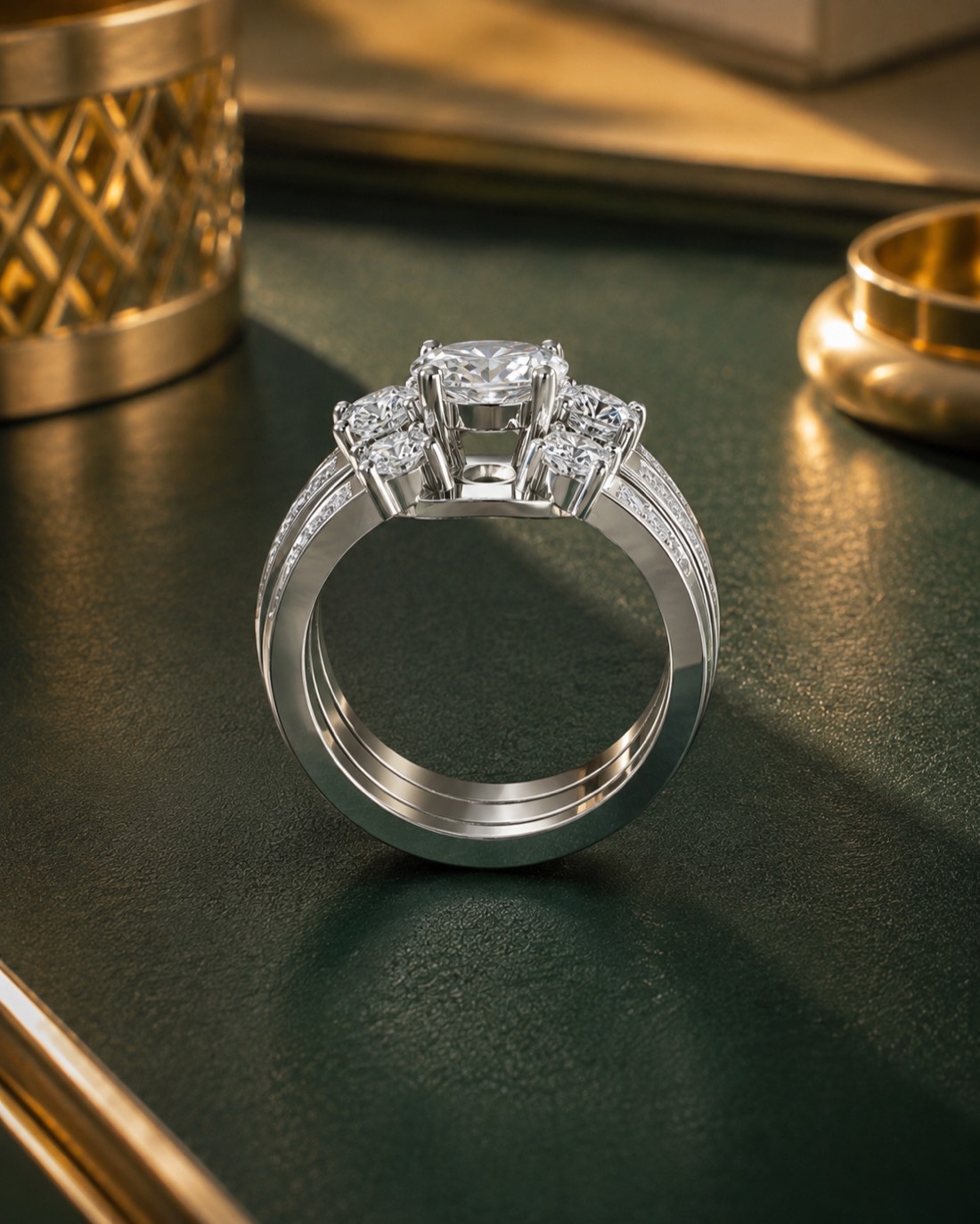
What Morganite Actually Is
Morganite is a variety of beryl — the same mineral group that produces emerald (green) and aquamarine (blue). What makes morganite unique is trace amounts of manganese, which give it that soft pink-to-peach-to-salmon color range. It was named in 1911 after financier J.P. Morgan, a major gem collector at the time.
Most morganite on the market today is mined in Brazil, Madagascar, or Afghanistan. It's not a rare stone in the way a fine sapphire or a natural fancy-color diamond is rare — which is a big part of why it's so much more affordable. It's one of several stones worth knowing about before you settle on a center stone — see our full diamond education guide for the complete picture of how diamonds and their alternatives are evaluated.
Morganite vs. Diamond: The Real Differences
Hardness. Diamond sits at a 10 on the Mohs hardness scale — the hardest natural material on earth. Morganite sits at 7.5-8. That's still durable enough for a ring worn daily (for comparison, quartz is a 7, and a lot of countertop material is in this range), but it means morganite is more prone to surface scratches over years of wear.
Brilliance. Diamonds are cut specifically to maximize light return — that's where the "sparkle" comes from. Morganite doesn't have the same optical properties, so it reads as a softer, more glowing stone rather than a sharp, fiery sparkle. Some people prefer this look; it's simply a different visual effect.
Color consistency. Diamond color grading runs from colorless to yellow, and most engagement diamonds are chosen to look as colorless as possible. Morganite is chosen for color — the pink-peach tone is the whole point, and it varies noticeably from stone to stone, so seeing the actual stone (not just a description) matters more than it does with a colorless diamond.
Price. This is the biggest difference. A well-cut 2-carat morganite might cost $400-$1,000. A 2-carat diamond of comparable visual size can run well into five figures. Morganite lets you go bigger and bolder on carat size for a fraction of the cost.
Is Morganite a Good Choice for an Engagement Ring?
It depends on what you're optimizing for.
Morganite makes sense if: she loves a soft, romantic pink tone; you want a large center stone without a large price tag; she's not planning to wear the ring during heavy manual work (gardening, frequent gym use with weights, manual labor); or she simply prefers colored stones to colorless ones.
Diamond (or a harder alternative) makes more sense if: she'll be wearing the ring during physically demanding daily activities; you want maximum resale and insurance value; or long-term "will it still look perfect in 20 years with zero extra care" matters more than upfront cost.
Neither answer is right or wrong — it's a genuine style-and-lifestyle decision, and it's one worth having an honest conversation about before you commit to a design. If you're weighing morganite against other non-diamond options, our guide to alternative center stones covers the full lineup, and our diamond color guide is useful context if you're deciding between a colored stone and a diamond chosen for its own subtle color.
Setting Choices That Protect a Morganite
Because morganite is softer than diamond, the setting matters more than it would for a diamond ring:
- Bezel settings — metal wraps around the stone's edge, protecting it from side impacts. This is one of the best setting choices for a softer stone.
- Halo settings — a ring of small diamonds around the morganite adds brilliance (which morganite doesn't produce much of on its own) and gives the softer center stone some extra visual "sparkle" contrast.
- Protective prongs — fewer exposed edges, prongs that sit slightly higher or lower depending on how active her hands are day to day.
Avoid super low-set stones in a ring that will see a lot of daily friction, and avoid pairing a large morganite with a thin band — the stone's weight needs adequate support.
Caring for a Morganite Ring
- Clean with warm water, mild dish soap, and a soft brush — avoid ultrasonic cleaners, which can stress a softer stone over time.
- Remove the ring before activities that risk scratches or impact: yard work, weightlifting, cleaning with abrasive products.
- Get the setting checked once a year, same as you would for any ring — loose prongs are the most common cause of a lost stone, regardless of what the stone is.
- Store it separately from other jewelry so it doesn't get scratched by harder stones sitting next to it in a jewelry box.
Frequently asked questions
Is morganite a real gemstone or a synthetic one?
Morganite is a real, naturally occurring gemstone — a variety of beryl. It's not a diamond simulant or a lab-created substitute; it's simply a different mineral chosen for its own color and character.
Will a morganite ring lose its color over time?
With normal wear and away from prolonged direct sunlight, morganite holds its color well for decades. Extended, intense heat or UV exposure can very gradually fade some stones, so it's not something to worry about with everyday wear.
Can you wear a morganite ring every day?
Yes, with the right setting. A protective setting like a bezel, combined with the yearly check most rings need anyway, makes daily wear reasonable for most people.
Is morganite cheaper than diamond because it's lower quality?
No — it's cheaper because it's more abundant and doesn't require the same mining and cutting economics as diamond. It's a genuinely different material, not a "downgrade" version of a diamond.
Can you pair morganite with diamond accents?
Yes, and it's one of the most popular combinations — small diamond accents in a halo or on the band add brilliance and contrast to the softer morganite center stone.
So Where Does This Leave You?
If the color and the price point are pulling you toward morganite, the next question is really about her — does she wear jewelry through physical work, does she already gravitate toward warm pink tones, is a bigger stone at a lower price the trade-off she'd actually want? Those answers point you toward the right setting and the right stone size, and they're worth talking through with someone who can show you both diamond and morganite side by side before you decide.
Where Amana Fits In
At The Amana Method, we don't push you toward diamond or away from it — we design around what she'll actually love and actually wear. If a morganite center stone with a protective bezel and a rose gold band is the right call for her, that's exactly what we'll build. If she'd rather have the classic sparkle of a lab-grown diamond, we'll design around that instead.
Because we're pricing the design and craftsmanship rather than marking up a stone at retail, a full morganite or diamond ring built this way typically runs $1,500-$4,000 total. Larger center stones or more detailed settings — a big morganite with a full pavé halo, for instance — can run past that range, and we'll always walk you through the exact number before you commit to anything.
Here's how it works: you bring the vision (or the questions) to a design consultation, we design the ring together using AI-assisted renderings so you can see it before it's made, you get a CAD file to review about three days later, and once you approve it and pay the balance, your ring is ready in about two weeks.
Curious what a morganite design would actually look like for her? Book a consultation and let's design it together.