Hearts and Arrows Diamonds: What They Actually Are
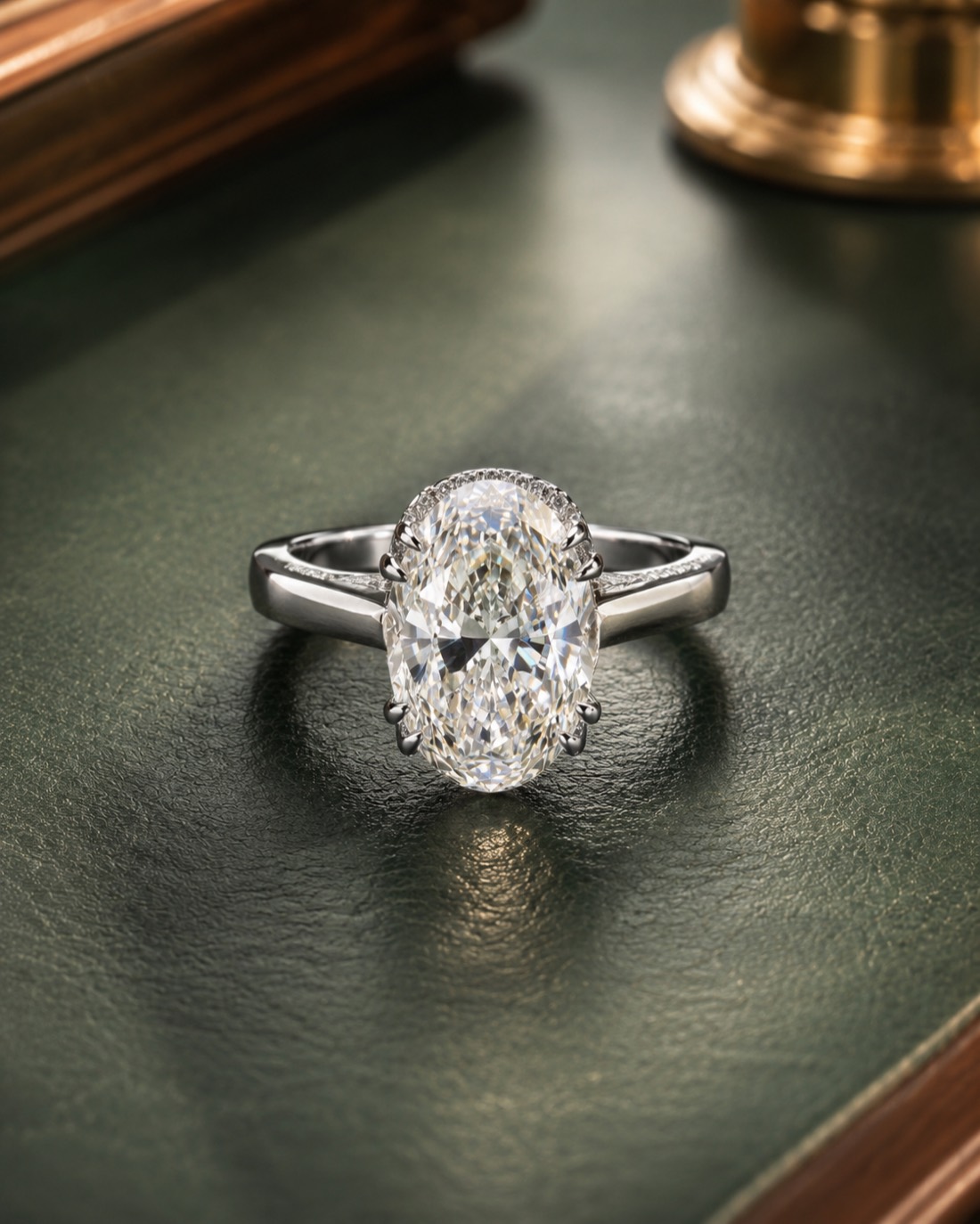
What the pattern actually is
For a refresher on diamond fundamentals before getting into this more advanced topic, our diamond education guide covers the basics this post builds on. Every round brilliant diamond has 57 or 58 facets arranged in a specific geometric pattern. When a diamond's facets are cut with extremely high precision and symmetry, that precision creates an optical effect: looking through the bottom (pavilion) of the stone with a special hearts-and-arrows viewer shows eight evenly-spaced heart shapes, and looking through the top (crown) shows eight evenly-spaced arrow shapes.
This isn't a different diamond shape or a special treatment — it's the same round brilliant cut, just executed with an unusually high degree of precision and symmetry.
Why it happens in some diamonds and not others
Cutting a diamond is a balance between preserving carat weight and achieving ideal proportions and symmetry. A cutter aiming purely for a hearts-and-arrows result has to prioritize precision over maximizing the weight kept from the rough stone, which sometimes means sacrificing carat weight to hit the symmetry needed. That's part of why hearts-and-arrows diamonds tend to cost more per carat than otherwise similar stones — the cutting process itself is more selective and more labor-intensive.
How you actually see it
You cannot see the hearts-and-arrows pattern with the naked eye or even under a standard jeweler's loupe. It requires a specific viewing tool (a hearts-and-arrows scope or viewer) that reflects light through the stone in a particular way to reveal the pattern. This matters for expectation-setting: buying a hearts-and-arrows diamond gets you verified superior cut precision, not a visual effect you or others will notice while wearing the ring day to day.
Is it worth paying extra for?
This depends on what you're optimizing for:
- If maximum brilliance and light performance matter most to you, hearts-and-arrows diamonds are, by definition, cut with excellent proportions and symmetry, which does translate into better light return and sparkle.
- If you're optimizing for the biggest, most eye-catching stone for your budget, the weight sacrificed to achieve the pattern means you might get better value from a very well-cut (but not hearts-and-arrows-certified) diamond of a slightly larger size.
- If nobody will ever look at your diamond through a special viewer, and most people won't, the pattern itself is more of a technical credential than something that changes how the ring looks in daily life.
How to verify it if you're considering one
Ask to see the diamond through a hearts-and-arrows viewer directly, or ask for documentation from a lab or vendor that specifically evaluates for the pattern (this is separate from a standard GIA or IGI grading report, which grades cut quality on its own excellent/very good/good scale but doesn't specifically certify hearts-and-arrows). A "super ideal" or "ideal" cut grade on a standard certificate is a good proxy for excellent cut quality, but it's not the same claim as a verified hearts-and-arrows pattern.
Frequently asked questions
Is hearts and arrows a diamond shape?
No, it's a symmetry and precision pattern found specifically in round brilliant diamonds, not a shape of its own.
Can other diamond shapes have a hearts-and-arrows pattern?
The classic hearts-and-arrows effect is specific to round brilliants, because it relies on that shape's particular facet arrangement. Some fancy shapes have their own analogous "ideal symmetry" patterns, but they're graded differently.
Does hearts and arrows mean the diamond is higher clarity or color?
No — hearts and arrows is purely about cut precision and symmetry. A diamond can have the pattern regardless of its clarity or color grade, which are graded on separate scales.
Is a hearts-and-arrows diamond automatically more brilliant?
It's associated with excellent symmetry and proportions, which generally supports strong light performance, but overall brilliance also depends on clarity, color, and the specific cut style, not symmetry alone.
How much more do hearts-and-arrows diamonds typically cost?
It varies, but expect a real premium over a similarly sized, similarly graded diamond without the verified pattern, since the cutting yield is lower and the process is more selective.
So where does this leave you?
Hearts and arrows is a legitimate marker of cutting precision, not a marketing gimmick — but it's worth being clear-eyed that it's a technical credential you view through a special tool, not a visual feature you'll notice on the hand. Whether it's worth the premium depends on whether cut precision or carat size matters more to you.
How Amana approaches cut quality
Rather than chasing a specific certification label, Amana's certified gemologists evaluate each stone's actual proportions, symmetry, and light performance during your consultation, and explain in plain terms what you're getting and why. If a hearts-and-arrows stone genuinely fits your priorities and budget, that's a fair option to discuss; if a very well-cut, slightly larger stone serves you better, that gets discussed honestly too. You can read more about what actually makes a diamond sparkle for the full picture on cut and light performance.
Design-plus-craftsmanship projects at Amana typically run $1,500–$4,000, though a premium-cut stone like this can push toward the higher end of that range or beyond, depending on size and grade. If you're weighing this trade-off, talk to a jeweler before you buy is a good companion read, and reaching out directly gets you a straight answer on what fits your specific budget.