How Much Does a Three-Stone Engagement Ring Cost?
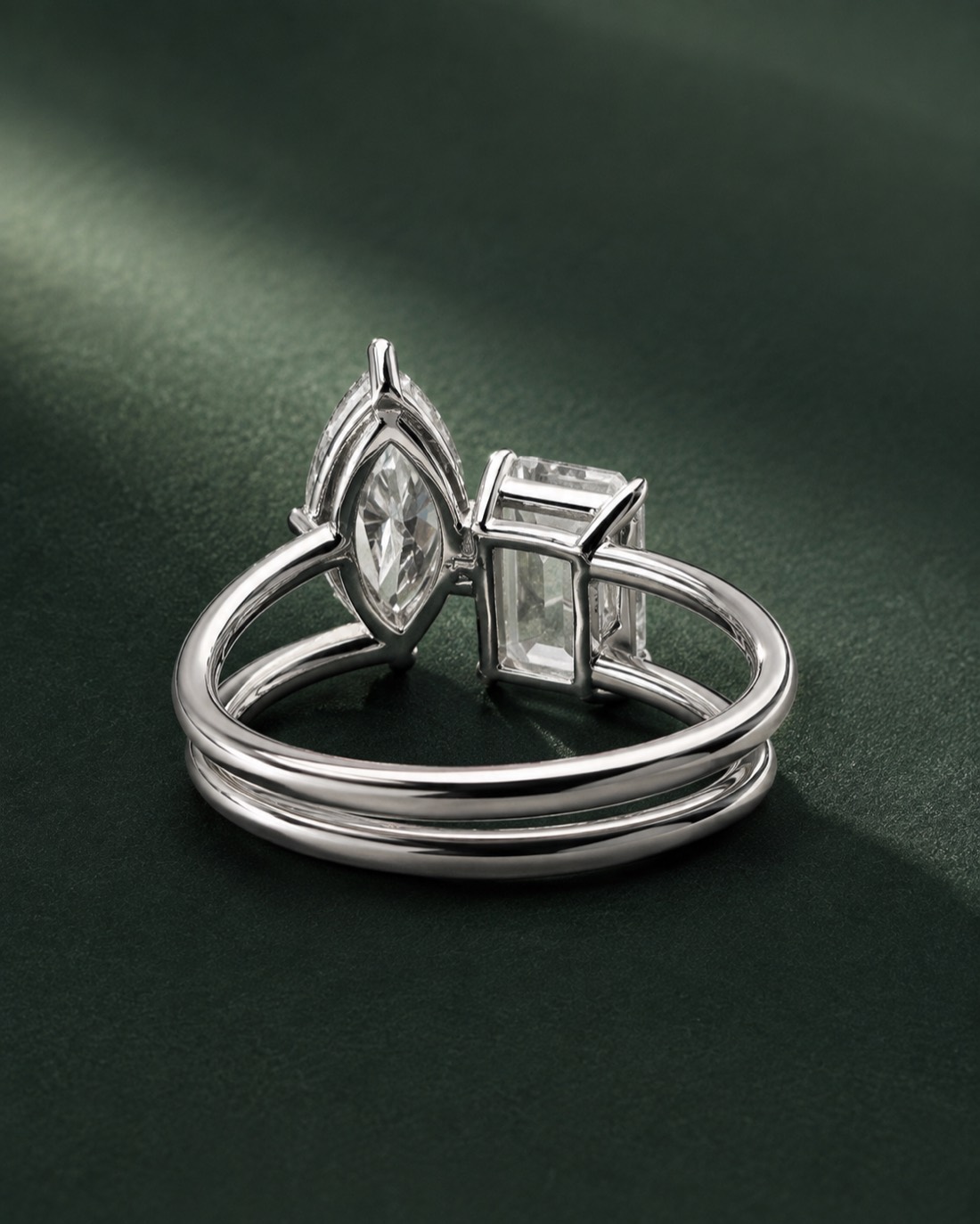
Three-stone rings (sometimes called "trilogy" rings) are popular for their symbolism — often described as representing a couple's past, present, and future — but that third stone (well, two extra stones) comes with real cost implications that are easy to underestimate when you're comparing prices online.
What Drives Three-Stone Ring Cost
Side stone size relative to the center stone. Side stones sized close to half the center stone's carat weight add noticeably more cost than small, proportionally tiny accents. A ring with two 0.25-carat side stones flanking a 1-carat center costs meaningfully more than one with two 0.10-carat accents.
Matching quality across three stones. Jewelers (or designers) need to color- and clarity-match three diamonds so they read as a cohesive set rather than three mismatched stones. That matching process takes more sourcing time than picking a single center stone, which factors into labor cost.
Setting complexity. A three-stone setting requires more prongs, more precise stone spacing, and often a more structured band (like a trellis or split-shank) to support three stones securely — all of which add labor time compared to a simple solitaire setting.
Side stone type. Diamond side stones cost more than sapphire, moissanite, or other alternative side stones, so choosing a diamond-and-sapphire or diamond-and-moissanite combination can bring the total down significantly while keeping the three-stone look.
Three-Stone vs. Solitaire: A Rough Comparison
For a similar overall "visual weight," here's generally how the math shifts:
- Solitaire, 1.5 carat center: cost concentrated entirely in one stone.
- Three-stone, 1 carat center + two 0.25 carat sides: total carat weight is similar (1.5ct), but you're now paying setting and matching costs across three stones instead of one, which typically pushes the price above the equivalent solitaire.
This is why some buyers who love the three-stone look choose smaller side stones, or substitute a non-diamond side stone, to manage the total.
Ways to Manage the Cost
- Use smaller, proportionally modest side stones rather than near-equal thirds.
- Consider lab-grown diamonds for all three stones, which lowers per-carat cost across the board.
- Mix stone types — a diamond center with sapphire or moissanite sides — for a distinct look at a lower total.
- Choose a simpler band style so the setting labor stays modest even with three stones.
Frequently asked questions
Why is a three-stone ring more expensive than a solitaire?
You're paying for two additional stones, the labor to match them in color and clarity, and a more complex setting that safely holds three stones instead of one.
How much do the side stones need to weigh?
There's no fixed rule — side stones range from tiny accents (a fraction of the center's weight) up to nearly matching the center stone. Smaller side stones keep cost down while still creating the three-stone look.
Can I use non-diamond side stones to save money?
Yes. Sapphires, moissanite, and other alternative stones are common side-stone choices and typically cost less than diamond side stones of the same size.
Does a three-stone ring need matching diamonds?
It doesn't need to be an exact match, but most people prefer the three stones to look visually cohesive in color and clarity, which does add some sourcing time and cost.
So Where Does This Leave You?
If you love the three-stone look but the added cost of two extra stones feels like it's stretching your budget past comfort, the fix usually isn't abandoning the design — it's finding the right combination of side stone size, type, and setting to get the look without the full price jump.
Why This Is Where Amana Fits In
A three-stone ring is a great example of why designing a ring beats buying one off a shelf: the side stone size, stone type, and setting style are all decisions you get to make deliberately, in a conversation with a designer, rather than accepting whatever combination a store happens to stock.
At Amana, design and craftsmanship for a ring like this typically runs $1,500-$4,000 total, though larger or more elaborate three-stone combinations — bigger side stones, all-diamond setups, more detailed settings — can run above that range depending on the stones you choose. You'll know exactly where your money is going, because you're the one making each of those calls with your designer, not choosing between whatever three-stone rings a jeweler happens to have in the case.
The process is straightforward: a design consultation (in person or virtual) where AI-assisted visuals show you the ring as you build it, a CAD file about 3 days later for approval, and the finished ring roughly 2 weeks after you sign off and pay the balance. If a three-stone design is on your mind, reach out and let's talk through what it could look like for your budget.