How to Care for an Engagement Ring
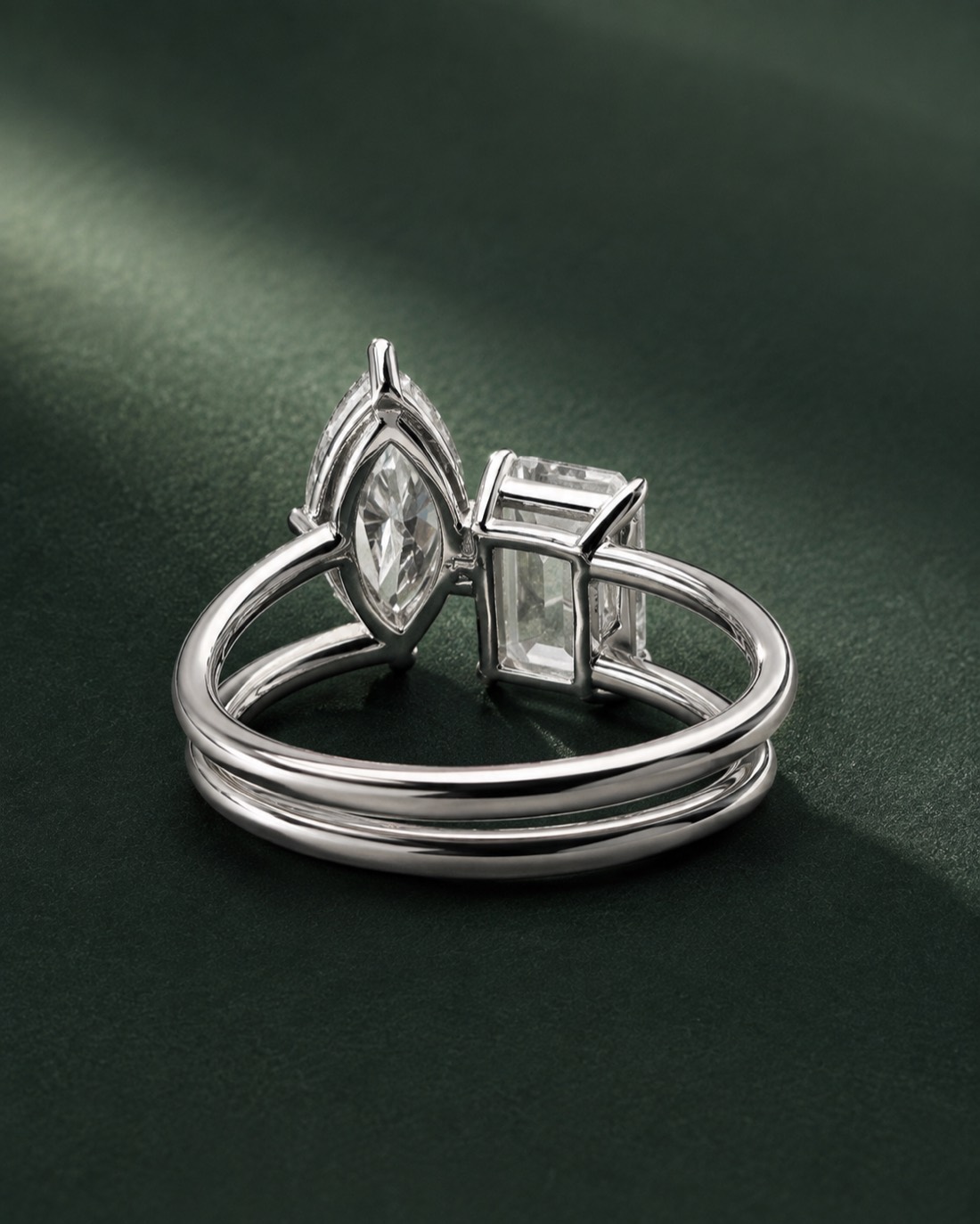
This is the after-the-sale step of our ultimate engagement ring buying guide — the part that decides whether the ring looks like it did on day one, ten years from now.
Why rings go dull (and it isn't the diamond)
Diamonds don't get cloudy. They get coated.
The specific villain is a film of skin oil, soap residue, lotion, and sunscreen that builds up on the underside of the stone — the pavilion, the part you never look at. Light is supposed to enter the top of a diamond, bounce around inside, and come back out at your eye. A greasy film on the bottom scatters that light before it can return. The stone looks flat and grey, and everyone assumes something's wrong with the diamond.
Nothing's wrong with the diamond. Two minutes with a toothbrush usually restores it completely. This is the single most useful thing to know about ring care: the sparkle is almost always still in there.
The at-home cleaning routine
What you need: warm water, plain liquid dish soap, a soft-bristle toothbrush (a baby toothbrush is ideal), a lint-free cloth, and a small bowl.
- Plug the drain. Please. Do it before anything else.
- Mix warm — not hot — water with a couple drops of dish soap.
- Soak the ring for 10-15 minutes. This loosens the film so you barely have to scrub.
- Brush gently, focusing underneath the stone. Get the brush up into the basket from below and into the gaps between prongs. That's where the buildup lives. Light pressure — you're dissolving a film, not sanding anything.
- Rinse in a bowl of clean water, not under a running tap.
- Pat dry with a lint-free cloth and let it air-dry a minute before putting it on. Paper towels leave fibers on prongs.
Every one to two weeks is plenty for most people. If she wears lotion or sunscreen daily — which, in South Florida, is most days — closer to weekly.
What to never put on an engagement ring
- Bleach and chlorine. Chlorine attacks the alloys in gold over time, weakening the metal itself. This includes hot tubs and pools, not just the bottle under the sink.
- Toothpaste, baking soda, or any abrasive powder. They're harder than gold and will leave a haze of fine scratches on the metal.
- Acetone and harsh solvents. Fine for a diamond, potentially rough on some gemstones and finishes.
- Ultrasonic cleaners, without checking first. They're excellent for a plain diamond solitaire and genuinely dangerous for others. The vibration can shake stones loose from worn prongs, and it can damage stones with feathers or inclusions near the surface. It's also a bad idea for emeralds, opals, and pearls, and for anything held with glue. If the ring's never been checked by a jeweler, don't guess.
- Household jewelry-cleaning dips with ammonia, on anything but plain gold and diamonds.
Care by metal
Platinum doesn't lose material as it scratches — it displaces it, forming a soft grey sheen called patina. Some people love it, some want it polished off. Polishing is easy and can be done periodically.
White gold is yellow gold alloyed pale and then plated with rhodium for that bright white finish. That plating wears — typically every one to two years, faster on hands that take a beating. Re-plating is routine and inexpensive, and it's not a defect. If a warm tint starts showing through, that's what's happening. Details in our platinum vs. white gold comparison.
Yellow and rose gold need the least maintenance. They scratch like any gold and can be polished, but they don't have a plating layer to wear off.
Higher karat gold is softer. 18k marks more easily than 14k. That's a trade-off you made at purchase, not a problem.
When to take it off
- The gym. Weights bend bands and chip stones. This is the number one cause of ring damage that people are surprised by.
- Cleaning. Bleach, ammonia, and chlorine-based products.
- Pools and hot tubs. Chlorine plus cold water plus loose fingers is how rings end up at the bottom.
- Beach and ocean. Cold water shrinks fingers, sand scratches metal, and the ocean does not give things back.
- Lotion and sunscreen. Or at least clean it after.
- Sleep, if the band has pavé or delicate detail. Snagging on sheets loosens small stones over time.
- Hands-on work — gardening, moving, cooking with heavy pots, anything with gloves.
Practical tip: pick one dish, in one place, that's always where the ring goes when it comes off. Almost every "I lost my ring" story starts with the ring being set down somewhere new.
The professional part: prong inspection
Home cleaning keeps a ring pretty. Professional inspection keeps the stone in it.
Prongs are small pieces of metal doing a hard job. They wear down against countertops, door frames, and pockets. A worn or bent prong doesn't announce itself — the stone stays put right up until it doesn't. A jeweler checks prong tension in about a minute, under magnification, and tightens or re-tips them if needed.
Every six to twelve months. Most jewelers do this free, often with a professional cleaning, and many warranties actually require it — miss the inspections and the coverage can quietly lapse. That's worth knowing before it matters; see return, warranty, and service policies.
Between visits, there's a home check: hold the ring next to your ear and tap it lightly. If you hear a faint rattle, the stone is moving. Stop wearing it and get it looked at.
Frequently asked questions
How often should I clean my engagement ring?
Every one to two weeks with soap and warm water is plenty for most people. Weekly if lotion or sunscreen is part of the daily routine, since that's what dulls a stone fastest.
Can I use an ultrasonic cleaner on my engagement ring?
On a plain diamond solitaire with sound prongs, usually yes. But the vibration can shake stones loose from worn settings and can damage stones with surface-reaching inclusions, and it's a bad idea for emeralds, opals, and pearls. Have a jeweler confirm before you use one.
Is it bad to wear an engagement ring in the shower?
Not damaging exactly, but soap film builds up under the stone and dulls it fast. If she showers in it, plan on cleaning it more often.
Why does my white gold ring look yellow?
The rhodium plating has worn through to the gold underneath. It's normal, it happens every one to two years, and re-plating is a routine, inexpensive fix.
How often do prongs need to be checked?
Every six to twelve months. It takes a minute under magnification, most jewelers do it free, and it's the main thing standing between a worn prong and a lost stone.
So where does this leave you?
Ring care is genuinely simple: soap, water, a soft brush, take it off for the rough stuff, and let someone check the prongs twice a year. That's the entire job.
The part that isn't in your control is how the ring was built in the first place. Prong thickness, how well the stone is seated, whether pavé stones were set with enough metal around them, how much material is in the shank — those decisions were made before you ever put it on, and they determine how much maintenance the ring will ask of you for the next fifty years.
Why who made it matters for how it holds up
We're Amana Engagement and we design and make custom rings, so we're not neutral. But construction is the honest heart of this topic.
When we design a ring, durability is part of the conversation, not an afterthought. If she's a nurse, or in a lab, or at the gym five days a week, that changes prong style, band width, and how high the stone sits — and we talk about it in the consultation, before anything's made. You see it in the CAD file, the exact 3D model that comes about three days later, and you approve it before we build. Revisions along the way are normal and usually small. Once you approve and pay the balance through an emailed link, the ring is ready about two weeks later. And because we made it, we know exactly how it's built when it comes back for service.
On price: a comparable ring at a traditional retail jeweler runs around $12,000, and that same finished ring bought wholesale still runs around $8,000. We charge for the design and the craftsmanship — typically $1,500 to $4,000 — and you get a real, certified diamond ring. Larger or rarer stones and more complex builds can run higher, and we explain exactly why before you commit.
Amana means "trust" in Arabic. Earn your trust, make your ring.