Diamond Simulants Explained: CZ, Moissanite & More
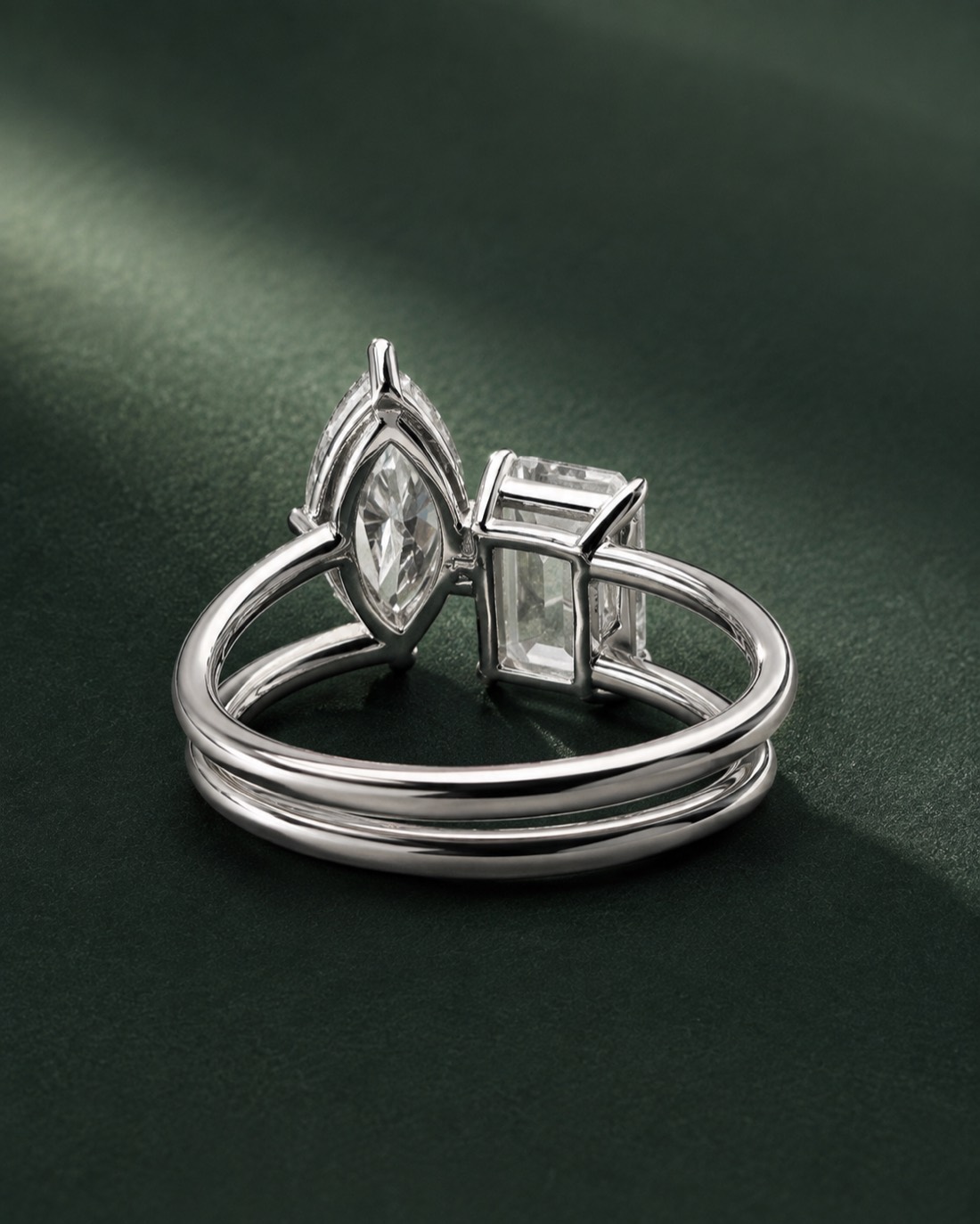
Simulant vs. lab-grown diamond: the difference that actually matters
This is the single most confused point in diamond shopping, so it's worth stating plainly:
- A lab-grown diamond IS a diamond. Same crystal structure, same chemical composition (carbon), same hardness, same optical properties as a natural diamond — it's grown in a controlled lab environment instead of formed underground over billions of years.
- A simulant is NOT a diamond. It's a different material entirely — a different chemical compound with different hardness, different light behavior, and different long-term durability — that's been chosen and cut specifically because it resembles a diamond's appearance.
Both are legitimate, honest options as long as they're sold accurately. The problem only arises when a simulant is misrepresented as a diamond (lab-grown or natural).
The most common diamond simulants
Cubic zirconia (CZ): A synthetic material made from zirconium dioxide. It's the most widely used and least expensive simulant, but it's noticeably softer than a diamond and tends to lose its sparkle and clarity over time with everyday wear, developing a slightly cloudy or "sleepy" look after months to years depending on how it's worn.
Moissanite: Made of silicon carbide, moissanite is significantly harder and more durable than CZ (second only to diamond on the hardness scale) and has more fire (colorful flashes of light) than a diamond — some people love the extra sparkle, others find it looks noticeably different from a diamond's brilliance up close, especially in bright sunlight.
White sapphire: A genuine natural or lab-grown gemstone in its own right (sapphires occur in many colors, including colorless), sometimes used as a diamond alternative. It's durable but has noticeably less brilliance and fire than a diamond, so it can look flatter or glassier by comparison.
Synthetic white spinel and YAG (yttrium aluminum garnet): Less common today but historically used simulants, generally softer and less brilliant than diamond or moissanite.
How simulants compare on durability
Diamond sits at the top of the Mohs hardness scale (10). Moissanite is close behind, sapphire is a bit softer than moissanite, and cubic zirconia is considerably softer than both — which is the main reason CZ shows wear (scratching, dulling) faster in an everyday ring than the other options.
Hardness isn't the whole durability story, though — a stone's resistance to chipping (toughness) matters too, and this varies by material and cut regardless of hardness ranking.
How to tell a simulant from a diamond
Untrained eyes usually can't reliably tell a well-cut simulant from a diamond just by looking, especially in casual lighting. A few things a trained eye or simple tests can pick up on:
- Fire (color flashes): Moissanite typically shows more rainbow-colored fire than a diamond; CZ can appear "too perfect" or glassy.
- Weight: Simulants are often lighter or heavier per millimeter of size than a diamond of the same dimensions, which a jeweler can check with a scale and measurements.
- Thermal and electrical testing: Gemological testers exist specifically to distinguish diamond from moissanite, since moissanite can fool older thermal-only diamond testers.
- Certification: A grading report from a diamond-specific lab is the most reliable confirmation of what a stone actually is.
Why someone might choose a simulant on purpose
Cost is the most common reason — simulants are typically far less expensive than even a modest diamond. Some people also like moissanite specifically for its extra sparkle, not as a "fake diamond" but as its own distinct gemstone choice. As long as it's represented honestly, choosing a simulant is a legitimate, informed decision — not something to be talked out of if it fits your priorities and budget.
Frequently asked questions
Is moissanite a fake diamond?
No — moissanite is its own distinct mineral (silicon carbide) with its own optical properties. It's a diamond simulant, not a counterfeit; it's a different gemstone chosen for its diamond-like appearance.
Do diamond simulants pass a diamond tester?
Basic thermal diamond testers can sometimes be fooled by moissanite specifically because it conducts heat similarly to diamond. Testers that also measure electrical conductivity can distinguish the two. Cubic zirconia is easily identified by standard thermal testers.
Can a jeweler tell a simulant from a diamond just by looking?
An experienced jeweler can often tell with a loupe and some basic tests, but for certainty — especially with high-quality moissanite — proper testing equipment or lab certification is the reliable answer.
Is cubic zirconia bad quality?
It's not "bad" — it's an inexpensive, widely available simulant that's honest about being a different material. Its main downside is that it's noticeably softer than diamond and tends to show wear over time.
Are lab-grown diamonds the same as simulants?
No, and this is the most important distinction to understand — lab-grown diamonds are chemically real diamonds. Simulants like CZ, moissanite, and white sapphire are different materials entirely that only resemble a diamond visually.
So where does this leave you?
If you're weighing a diamond simulant against a real diamond (natural or lab-grown), the honest framing is: simulants are a different material chosen for a diamond-like look at a lower cost, while lab-grown diamonds are real diamonds at a lower cost than natural. Neither choice is wrong — what matters is that you know exactly what you're buying and it's represented to you accurately.
If you want a real diamond without the retail markup
If what you actually want is a genuine diamond — natural or lab-grown — without the layers of markup that come from selling through a traditional jewelry store, that's the specific problem designer-direct pricing solves. You're not choosing a simulant to save money; you're cutting out the markup on a real stone instead.
At Amana, design plus your finished ring typically runs $1,500–$4,000 total for a genuine diamond (natural or lab-grown, your choice), with larger or more complex stones running above that range. We walk you through exactly what you're getting and why it costs what it costs — no pressure toward a stone you don't want. You'll design with a real person (in person or virtually), see your concept visualized with AI, get your CAD file about 3 days later, and receive your finished ring roughly 2 weeks after you approve it.
If you want to talk through diamond, lab-grown, or another gemstone option honestly — including what fits your budget — get in touch and we'll lay it all out for you.