Diamond Shapes Explained: Round, Oval, Cushion, Emerald, Pear & More
Shape is one part of our full diamond education guide, which covers the 4Cs, certification, and lab-grown vs. natural too.
Round Brilliant
The most popular and most researched diamond shape, engineered specifically to maximize light return and sparkle.
- Pros: Maximum brilliance, most forgiving of minor inclusions (they hide well), timeless
- Cons: Most expensive per carat of any shape, since more rough diamond is cut away to achieve the round shape
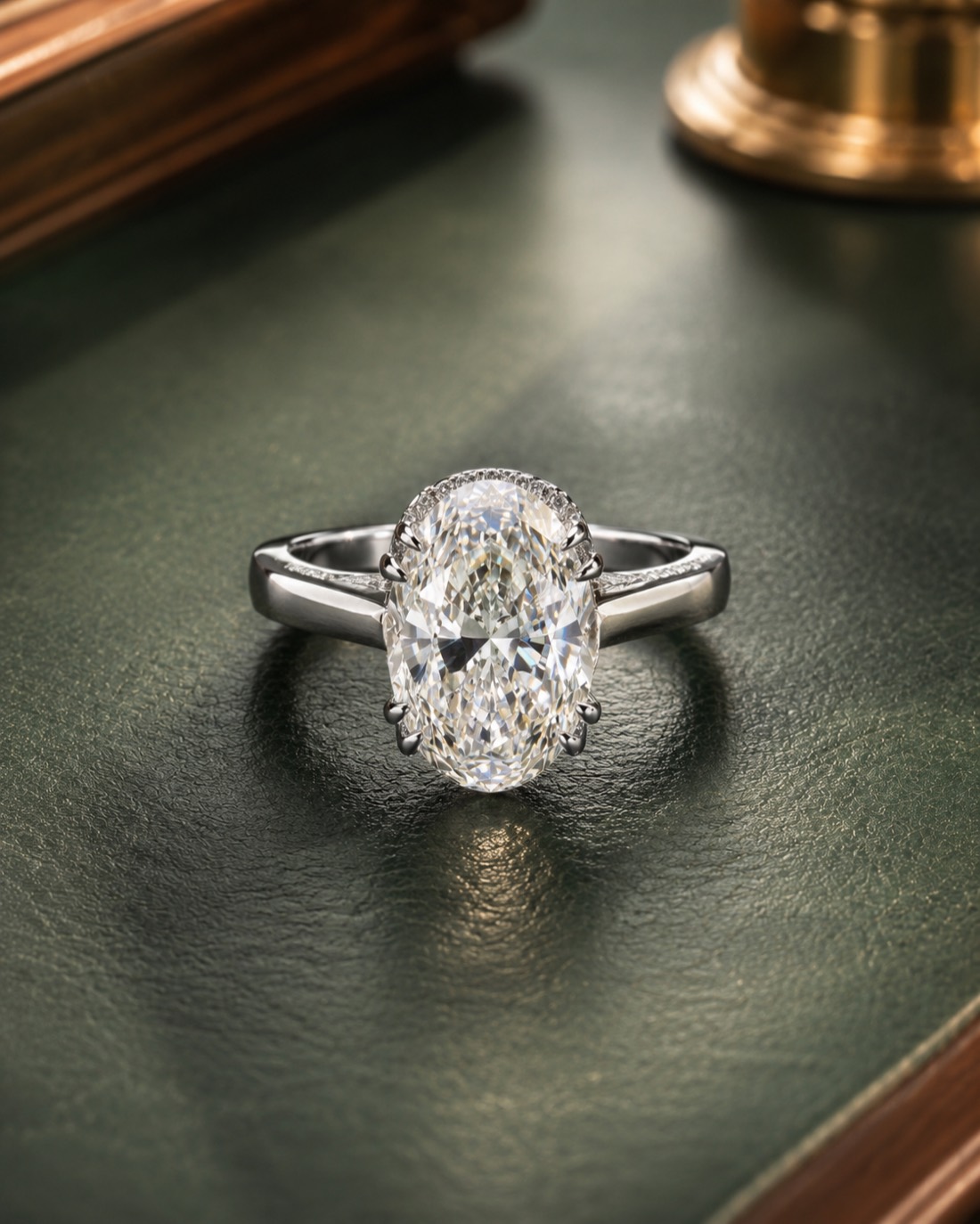
Oval
A elongated version of the round brilliant, currently one of the most requested shapes.
- Pros: Looks larger than its actual carat weight due to its elongated shape, flattering on most hand shapes, strong brilliance
- Cons: Can show a "bowtie" effect (a shadow across the center) if not well-cut — cut quality matters more here than in round stones
Cushion
A square or rectangular shape with rounded corners and larger facets, giving a soft, romantic look.
- Pros: Vintage-inspired look, hides inclusions well, generally more affordable per carat than round
- Cons: Less overall sparkle/fire than a round brilliant; quality varies more between cutters
Emerald
A rectangular step-cut shape with long, open facets instead of the small triangular facets of a brilliant cut.
- Pros: Elegant, "hall of mirrors" light effect instead of sparkle, shows off high clarity beautifully
- Cons: Because facets are larger and more open, inclusions and color are more visible — clarity and color grade matter more here than in other shapes
Pear
A hybrid of round and marquise shapes — a teardrop.
- Pros: Elongating on the finger, versatile (worn point-up or point-down), often more affordable per carat than round
- Cons: Needs precise symmetry — an off-center point is noticeable; can show a bowtie effect like ovals
Princess
A square brilliant-cut shape.
- Pros: Strong brilliance closer to round, more affordable per carat than round, modern look
- Cons: Pointed corners are more prone to chipping and need protective prong settings
Radiant / Asscher
Radiant blends brilliant faceting with a rectangular or square outline; Asscher is a square step-cut similar to emerald but with more cropped corners.
- Pros: Radiant offers strong sparkle with a modern silhouette; Asscher has a distinctive Art Deco look
- Cons: Both are less common, so comparison shopping and resale/replacement matching can be harder
How shape affects price
For the same carat weight and quality grade, fancy shapes (oval, pear, cushion, princess, radiant) typically cost 10-30% less than round brilliant, because less rough diamond material is wasted in cutting a non-round shape. This is one of the simplest ways to get a visually larger stone for the same budget.
Frequently asked questions
What's the difference between diamond shape and diamond cut?
Shape is the outline (round, oval, emerald, etc.). Cut refers to the proportions, angles, and finish that determine how well a diamond reflects light — every shape can be cut well or poorly.
Which diamond shape looks the biggest for the money?
Elongated shapes like oval, pear, and marquise generally look largest for their carat weight because of their shape's surface area and proportions.
Which diamond shape is the most durable?
Round, cushion, and oval shapes are generally more chip-resistant than pointed shapes like pear, marquise, or princess, which need protective settings at their corners/points.
Is round always the most expensive shape?
Almost always, yes — round brilliant commands the highest price per carat of any shape due to cutting waste and universal demand.
So what does this actually mean for choosing a shape?
Shape is one of the most personal decisions in the entire ring-buying process — and one of the easiest places to stretch a budget, since fancy shapes can look larger and more distinctive for less money than round. The real question isn't "which shape is objectively best," it's "which shape actually fits my partner's hand, style, and lifestyle" — and that's almost impossible to know for certain without seeing it modeled first.
Why shape decisions work better with a designer
At a retail store, you're usually choosing a shape from whatever stones happen to be in the case that day — which limits your actual options and makes side-by-side comparison difficult. When you design your ring with Amana, we use AI-assisted visuals during your consultation to show you multiple shapes on a rendering of your actual setting, so you can compare oval vs. cushion vs. emerald side by side before committing to anything — something a display case simply can't do.
And because we're pricing the design and craftsmanship rather than marking up whichever stones happen to be sitting in inventory, choosing a fancier, less common shape doesn't come with a retail premium. Design and craftsmanship pricing typically runs $1,500–$4,000 regardless of which shape you choose (stone size and rarity are what can shift that number, and we'll always explain why upfront) — meaning your shape choice is about what you and your partner actually love, not what happened to be profitable to stock that month.
Book a free design consultation and see your favorite shapes rendered on your actual ring concept before you decide.