Designer vs. Jewelry Store: Who Should Make Your Ring?
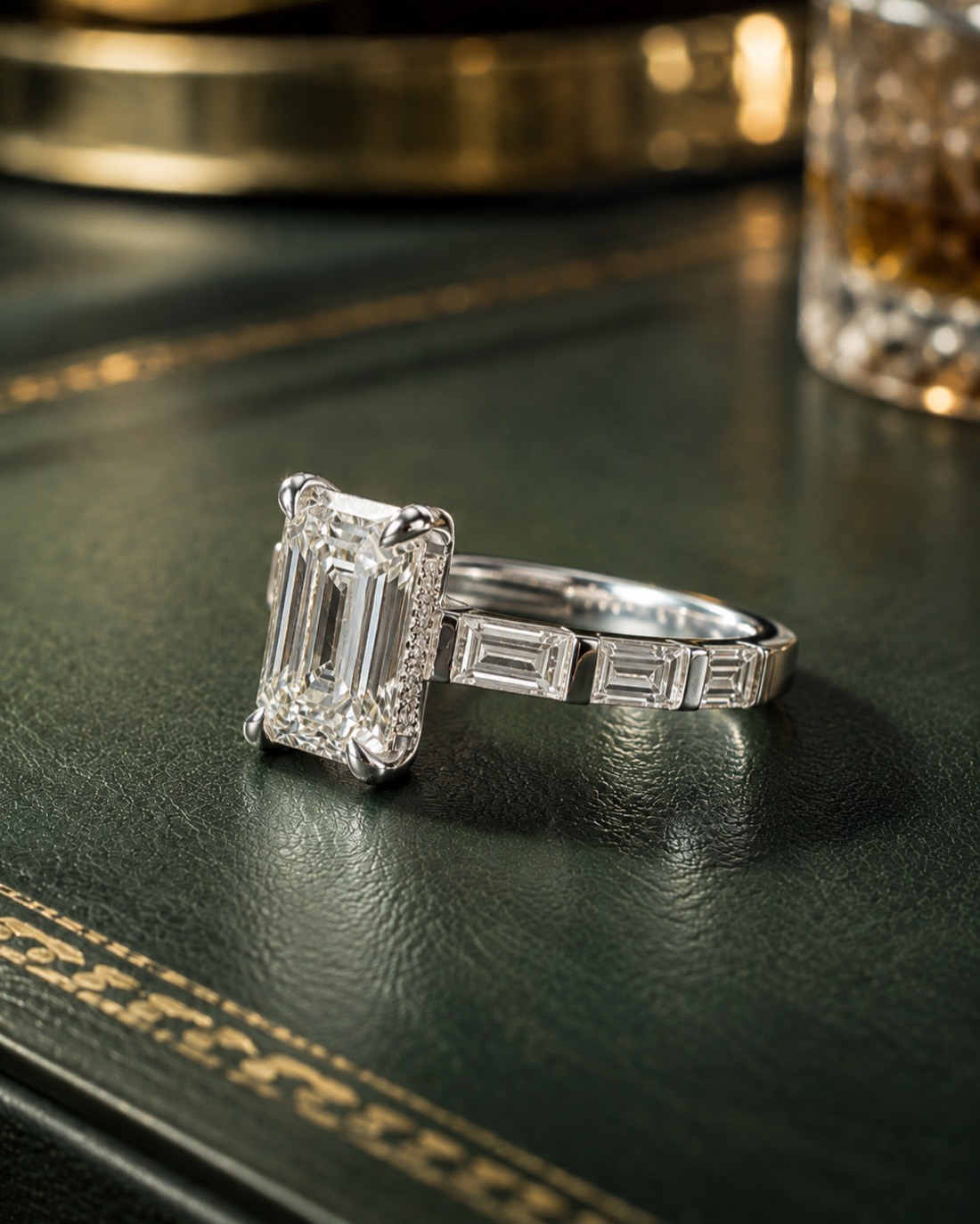
For the full pricing picture behind this comparison, see our pillar guide on why custom doesn't cost more.
What you're paying for at a retail jeweler
When you buy from a traditional jewelry store — whether it's a mall chain or a well-known national brand — your price is covering more than the ring itself:
- Physical retail space — rent, utilities, staffing multiple locations
- Inventory — cases full of pre-made rings that need to sell, including the ones that don't
- Marketing — national ad campaigns, celebrity endorsements, brand positioning
- Sales commission — built into the price you're quoted
None of that is inherently bad — it's just how retail works, in jewelry or anywhere else. But it does mean a meaningful chunk of your total price has nothing to do with the diamond or the setting sitting in front of you.
What you're paying for with a designer
A jewelry designer working directly with clients (in-person or virtually) generally has a leaner cost structure — no large storefront network, no national ad budget, often no separate sales team. Instead, your money goes toward:
- The design process itself — a consultation to understand your taste, budget, and story
- Craftsmanship — actual hands-on work building a ring specific to you, often previewed with a CAD (computer-aided design) file before anything is made
- The stone and setting, priced closer to what they actually cost
The tradeoff: you're usually working with a smaller, more personal operation rather than a nationally recognized name — which for many couples is exactly the point.
Custom vs. off-the-shelf: it's not just about price
Beyond cost, there's a real experience difference:
- Retail: You choose from what's already made, or make small modifications to an existing template. Turnaround is often immediate since the ring may already exist.
- Designer: The ring is built around your specific vision from the first sketch. Turnaround takes longer (often a few weeks) because nothing exists yet — it's made for you, not pulled off a shelf.
If having something no one else has is important to you, that's a design-first advantage retail generally can't replicate at scale.
Questions to ask before you decide
- Am I okay with a ring that looks similar to what other couples in my area are wearing, or do I want something unique to us?
- Do I want to see and approve a design before it's made, or am I fine choosing from what's already on display?
- Is the brand name on the box worth the price difference to me?
- How much of this price is going toward the ring itself, versus the store I'm standing in?
Frequently asked questions
Is a custom-designed ring always cheaper than a retail ring?
Not automatically — but when a designer's model is built around cutting retail overhead rather than a storefront network, the price can be dramatically lower for a comparable diamond and craftsmanship.
How long does a custom-designed ring take compared to buying in-store?
Retail purchases can be immediate if the ring is in stock. A custom design typically takes a few weeks from consultation to final ring, since it's being built specifically for you.
Do I get to see the ring before it's made?
With most designers, yes — a CAD (3D digital design) or AI-assisted concept is usually created and approved before the physical ring is built, so there are no surprises.
Is buying from a designer riskier than a known retail brand?
Look for the same fundamentals either way: real diamond certification (GIA/IGI), a clear written price before you commit, and reviews from actual past clients.
So what does this actually mean for your decision?
The honest version is this: retail jewelers and independent designers aren't selling the same thing, even when the finished rings look similar. One is selling you a product off a shelf, with a price built around running a national retail business. The other is selling you a process — one built around your ring, specifically, at a price built around the actual work.
Why we built Amana around the designer model
This is exactly the gap Amana exists to close. We're not a retail storefront with a catalog of pre-made rings and a national ad budget baked into every price tag. We're designers — you sit down with us (in person or virtually), we use AI-assisted visuals to build your concept together in real time, and within a few days you get a CAD file to review and approve before anything is made.
Because we're not paying for a retail network, our pricing reflects that: design and craftsmanship typically runs $1,500–$4,000 (larger or more complex stones can run higher — we'll always tell you exactly why before you commit to anything), and you still walk away with a real, certified diamond ring at the end. Compare that to a comparable ring running around $12,000 at a traditional retailer, or roughly $8,000 even buying a finished ring wholesale — the difference is almost entirely the layer of cost that a designer-direct model removes.
You don't have to choose between "affordable" and "actually yours." That's the whole point of designing instead of shelf-shopping. Book a free consultation and we'll show you exactly what your ring could look like, and what it would actually cost, before you spend a dollar.