Natural, Then Lab, Now Designer-Direct: The New Way Smart Couples Are Buying Engagement Rings
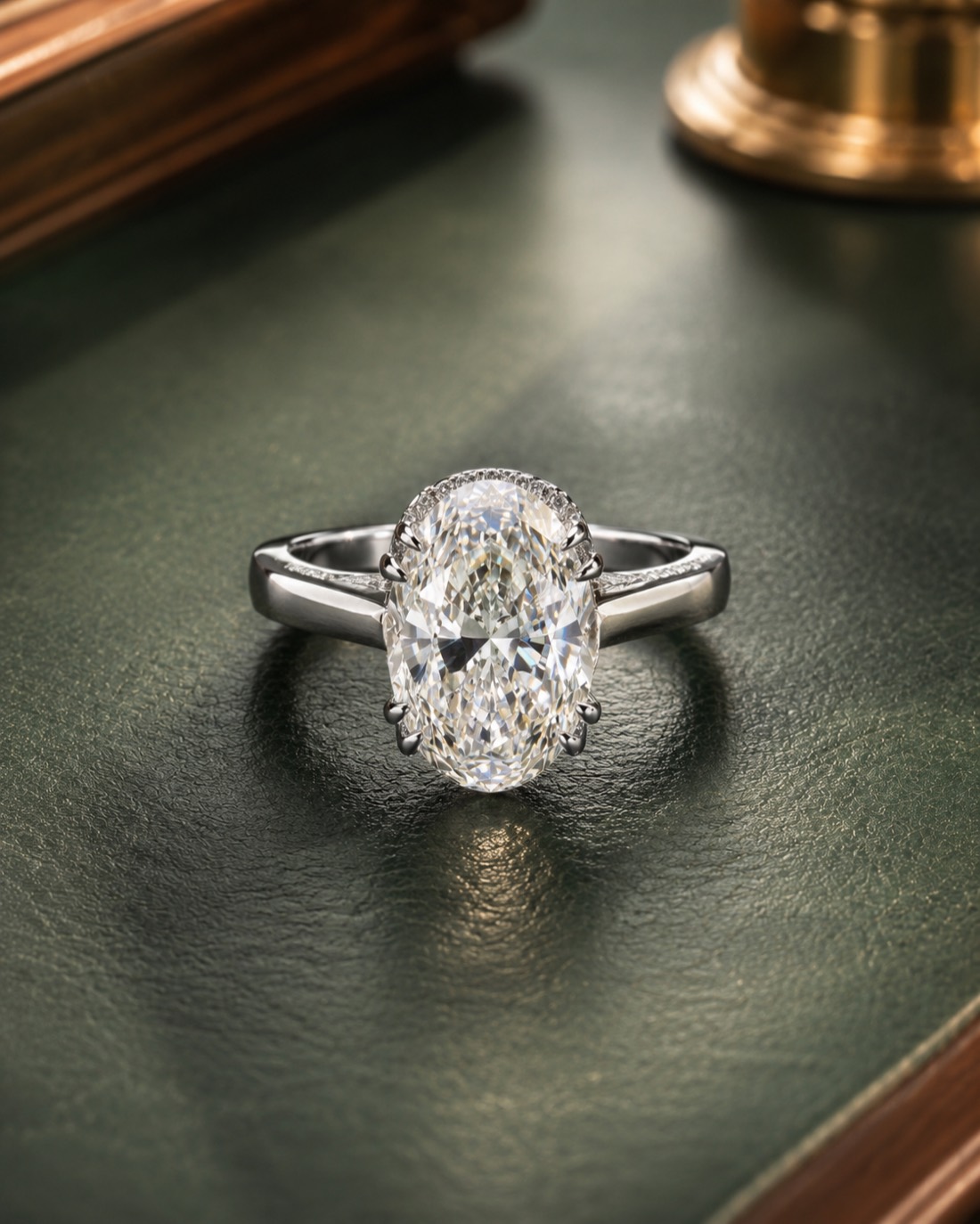
This is the wider story behind our pillar guide on why custom doesn't cost more.
Shift one: natural diamonds, priced by scarcity
For most of the 20th century, there was really only one way to buy a diamond engagement ring: a natural, mined stone, priced heavily around rarity, controlled supply, and decades of marketing (including that "two months' salary" line, which was itself a 1940s ad campaign, not a real financial rule). Prices climbed steadily, and for a long time, there wasn't a meaningfully different option.
Shift two: lab-grown diamonds broke the scarcity model
Lab-grown diamonds changed the stone side of the equation. Chemically and visually identical to natural diamonds, but produced through a controlled, scalable process instead of geological rarity, they typically cost 60-85% less for a comparable stone. For the first time, couples could get a larger, higher-quality diamond without the natural-diamond price tag. This shift didn't happen because natural diamonds got worse — it happened because a real, honest alternative became available, and enough people chose it that it became mainstream.
What lab-grown diamonds didn't fix
Here's the part that's easy to miss: lab-grown diamonds solved the stone's cost, not the ring's cost. You could buy a lab-grown diamond and still pay a heavily marked-up price if it was set and sold through a traditional retail model — because the storefront, the sales commission, and the national ad budget were still baked into the price, regardless of what the stone itself cost.
Shift three: buying direct from a designer
This is the shift happening right now. Instead of a diamond (natural or lab-grown) getting marked up through a retail supply chain — wholesaler, distributor, retail store, sales floor — more couples are going straight to an independent designer who builds the ring directly with them. The designer isn't paying for a mall lease or a national ad campaign, so their pricing reflects the actual design, craftsmanship, and stone — not several layers of retail margin stacked on top.
This mirrors what happened with lab-grown diamonds almost exactly: an entrenched, expensive default gets challenged by a genuinely comparable alternative that cuts out unnecessary cost, and enough people choose it that it stops being a "trend" and starts being a normal way to buy.
Why this shift is happening now specifically
A few things converged to make designer-direct buying realistic at scale:
- CAD and 3D design tools became accessible enough for independent designers to show clients an accurate preview before building anything — removing the "what if it doesn't look right" risk that used to make custom rings feel unpredictable.
- AI-assisted visualization now lets a designer generate a realistic concept of a ring in a single consultation, something that used to take weeks of sketches and back-and-forth.
- Younger buyers research differently — searching directly for answers (including asking AI tools) rather than relying solely on what a retail salesperson tells them in-store, which has made the retail markup layer more visible and less accepted.
- Social proof moved online — reviews and real client photos now do the trust-building work that a big storefront brand name used to do.
What to actually look for in a designer-direct purchase
If you're considering this route, the fundamentals still matter:
- Real diamond certification (GIA or IGI), regardless of natural or lab-grown
- A clear, written price before you commit to anything — not a vague estimate
- A design preview (CAD or AI-assisted concept) you approve before the ring is built
- Real reviews from real past clients, not just polished marketing photos
Frequently asked questions
Is designer-direct engagement ring buying actually cheaper, or just different?
Genuinely cheaper for a comparable ring, in most cases — because the pricing structure removes the retail markup layers (storefront, national ads, sales commission) rather than just repackaging the same costs.
Do I still get a real, certified diamond buying this way?
Yes — reputable designers use the same GIA/IGI-certified diamonds as retail jewelers; certification isn't tied to how you're buying, it's tied to the stone itself.
Is this the same thing as buying a diamond online without seeing it first?
No — designer-direct typically involves an actual consultation (in-person or virtual) and a design preview before anything is built, which is different from a blind online purchase.
Will this way of buying replace retail jewelers entirely?
Not necessarily entirely, but it's following the same adoption curve lab-grown diamonds did — starting as an alternative, becoming increasingly mainstream as more people learn about it.
So what does this actually mean for you, right now?
If you're ring shopping in 2026, you're shopping at a genuinely different moment than couples were even five years ago. The two changes that already happened — lab-grown diamonds cutting stone costs, and CAD/AI tools making custom design accessible — have combined to make designer-direct buying a real, practical option instead of a niche one.
This is exactly why Amana exists
We built Amana around this exact shift. You sit down with us — in person or virtually — and we use AI-assisted visuals to build your ring concept together in that first consultation. A CAD file follows a few days later for you to review and approve. Once you sign off, your ring is ready in about two weeks. No storefront markup, no sales floor pressure, no guessing what the finished ring will actually look like.
Here's the real number comparison: a comparable ring at a traditional retail jeweler runs around $12,000. Buying a finished ring wholesale would still run around $8,000. With Amana, you're paying for the design and craftsmanship — typically $1,500–$4,000, depending on your stone and design (larger or more complex stones can run higher, and we'll always explain exactly why before you commit to anything) — and you still walk away with a real, certified diamond ring. Not a rendering. Not a sample. Your ring.
Natural diamonds were the only option once. Then lab-grown diamonds gave people a smarter way to buy the stone. Now, designer-direct is giving people a smarter way to buy the whole ring. Amana means "trust" — and that's the whole model: earn your trust first, then make your ring.
Book a free design consultation and see what your ring could actually look like — and cost — before you decide anything.