Cushion Halo Engagement Rings: What to Know
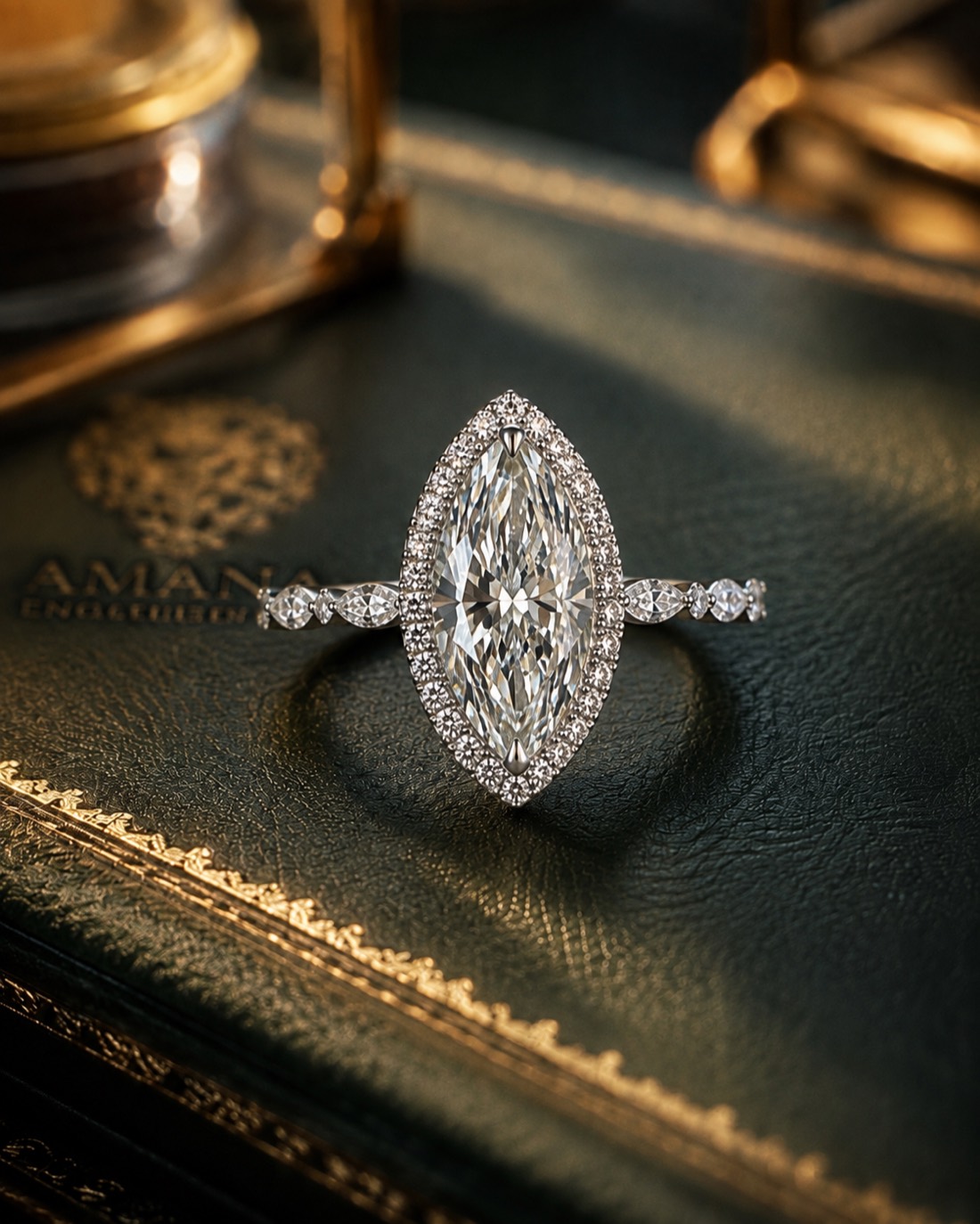
What Makes a Cushion Cut Different
A cushion cut is a square or rectangular shape with rounded corners and large, flat facets — it's sometimes described as a "pillow" shape, which is where the name comes from. Compared to a round brilliant, a cushion cut tends to show less of the tight, scattered sparkle rounds are known for and more broad, flashy brilliance, with larger visible facets.
Cushion cuts also tend to retain more color than round cuts when the diamond has any natural tint, since their facet pattern reflects light differently. That's worth knowing if you're considering a lower color grade to save on cost — a cushion may show a hint of warmth that a round of the same grade would mask better.
Why a Halo Works So Well With a Cushion Shape
A halo follows the outline of the center stone, and a cushion's rounded-square shape gives the halo a softer, more structured look than it would have around a round or oval stone. The straight-ish edges of the cushion give the halo clean lines to follow, while the rounded corners keep the overall silhouette from feeling boxy.
There's also a practical visual effect: a halo increases the apparent size of a cushion cut noticeably, since cushion cuts already read as larger per carat than some other shapes due to their broader table. Pairing the two tends to produce a ring that looks substantially bigger than its actual carat weight would suggest.
Classic Halo vs. Hidden Halo on a Cushion Shape
A classic halo sits visibly around the base of the cushion, adding sparkle you can see from directly above. A hidden halo sits just underneath the stone, invisible from the top but catching light from the side — on a cushion cut, this can accentuate the stone's corners in a way that's subtler but still noticeable in person.
Neither is objectively better; it depends on whether you want the halo to be part of the visual statement (classic) or a quiet detail that shows up when the ring catches the light at an angle (hidden).
Single Halo vs. Double Halo
A single halo on a cushion cut is the more common, more classic choice, and it tends to keep the ring's proportions balanced — the halo frames the stone without overwhelming it. A double halo adds a second ring of diamonds around the first, which increases both size and sparkle but can start to visually compete with the cushion shape itself if the center stone is on the smaller side. Double halos generally work best with larger cushion centers, roughly 1.5 carats and up, where there's enough stone to anchor the extra detail.
Metal Choices for a Cushion Halo
White metals (platinum or white gold) tend to make the halo diamonds blend more seamlessly with the center stone, creating one continuous field of sparkle. Yellow or rose gold creates more contrast between the warm band and the white diamonds, which some people prefer because it makes the cushion's shape and the halo's outline more visually distinct rather than blended.
Frequently asked questions
Does a halo make a cushion cut look bigger?
Yes, often more noticeably than with other shapes, since cushion cuts already have a broad table that reads large. The halo adds visual width around the stone's outline, compounding that effect.
Is a cushion halo a good choice for a vintage-style ring?
Yes — cushion cuts are among the oldest diamond shapes still in regular use, and halos have deep roots in Edwardian and Art Deco jewelry. The combination naturally leans vintage, though it can also be designed with clean, modern lines if that's the look you want.
How many diamonds are typically in a cushion halo?
It depends on the center stone's size, but a single halo around a cushion typically uses somewhere between 16 and 26 small diamonds, since a cushion's rounded-square outline usually needs slightly more stones to follow its shape evenly than a round halo does.
Does a cushion halo snag on things more than a round halo?
Not meaningfully more. The corners of a cushion cut are already rounded, so the halo around it doesn't introduce sharp edges that a round halo wouldn't also have.
Can I pair a cushion halo with a plain wedding band later?
Yes, and it's a common pairing. A simple, straight wedding band tends to complement a cushion halo well without competing with its detail, though a slightly curved or contoured band can also be designed to nest against the halo's shape.
So Where Does This Leave You?
A cushion halo isn't a trend so much as a genuinely well-matched pairing — the geometry of the stone and the geometry of the setting reinforce each other instead of fighting for attention. The real decisions left are about scale: classic or hidden, single or double, how big a center stone you're starting with. Those are design choices, not guesswork, and they're much easier to make once you can actually see the combination built around your specific stone rather than imagining it from a catalog photo.
Why This Is Where Amana Comes In
Most jewelers show you a cushion halo the way it already exists in their case — a fixed stone count, a fixed proportion, take it or leave it. We build the halo around your actual center stone, so the proportions are right for that specific diamond instead of being close enough.
Through the Amana Method, we walk through your cushion cut's exact dimensions, how big a halo makes sense for it, and whether a classic or hidden halo fits the vintage or modern direction you're going for — then design it from there.
On pricing: most of our clients land their total design-and-ring cost between $1,500 and $4,000, cushion halo included. A larger cushion center or a double halo can push the total above that range, and we'll always walk you through exactly where your design lands before you commit to anything.
Once your CAD is approved, your ring is typically ready in about two weeks. If a cushion halo is on your list, book a consultation and we'll design it around the actual stone, not a generic template.
For more on how cushion cuts compare to other shapes, see cushion vs. round diamond. If you're weighing a hidden halo instead, our halo vs. hidden halo breakdown covers the visual differences in depth, and our companion post on emerald-cut bezel rings is worth a look if you're still comparing shape-and-setting pairings. For the cost side of halo settings specifically, see cost of a halo setting. And for the full picture on designing a custom ring from scratch, start with our ring design guide.