How Much Does a Halo Setting Add to Ring Cost?
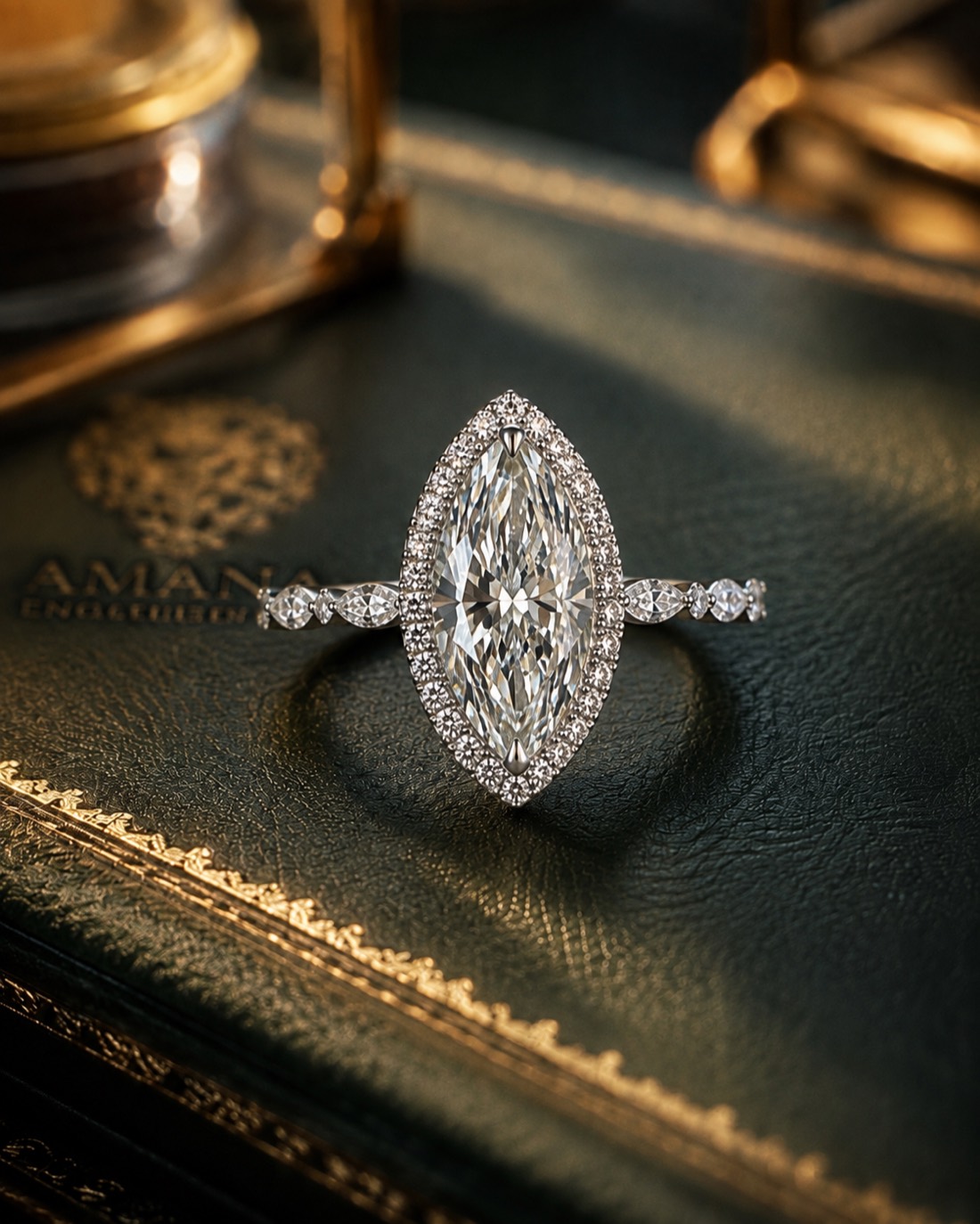
What a Halo Setting Actually Is
A halo setting surrounds your center stone with a ring of smaller diamonds, usually set close together so they catch light as one continuous sparkle. It's one of the most requested styles in engagement rings because it does two things at once: it frames the center stone so it reads as the focal point, and it makes the whole ring look bigger from a few feet away.
The "halo" itself can sit right at the base of the center stone (a classic halo) or be set slightly lower, tucked under the stone so it's only visible from certain angles (a hidden halo). Classic halos are more common and usually what people mean when they just say "halo."
Where the Cost Actually Comes From
A halo doesn't cost more because the diamonds in it are expensive on their own — individually, the small stones in a halo are often melee diamonds, meaning under a fifth of a carat each. What drives the price is everything else involved in getting them onto the ring:
Labor. Setting a dozen or more tiny diamonds by hand, evenly spaced, at consistent height, takes real time and a steady hand. This is skilled work, and it's priced that way.
Metal. A halo needs a gallery (the small wall of metal that holds the stones) built around the center setting. That's additional metal and additional casting work compared to a plain solitaire.
Stone count and size. A single halo might use 16 to 20 small diamonds. A double halo, which wraps a second ring of stones around the first, roughly doubles that labor and that stone count — which is why double halos tend to land at the top of the price range.
Halo Cost vs. a Plain Solitaire
A solitaire setting is just a center stone and the prongs or bezel holding it — no extra diamonds, no extra gallery work. That's the cheapest setting style to produce, which is why it's often the baseline everyone compares against.
Moving from a solitaire to a halo is usually the single biggest jump in setting cost you'll see on a quote, bigger than most band or metal upgrades. If budget is tight, it's worth asking what a pavé band or a smaller halo would do to the same design, since both can deliver a similar "more sparkle" effect for less than a full halo build.
Does a Hidden Halo Cost More or Less Than a Visible One?
Roughly the same, sometimes slightly more. A hidden halo uses a comparable number of stones, but the setting work is arguably more technical, since the diamonds have to sit cleanly under the center stone without showing gaps when viewed from the side. The visual payoff is different — more color flash, less obvious "halo" look from the top — but the cost isn't meaningfully lower.
Does the Center Stone Shape Change the Price?
A little. Round and oval halos are the most standardized, so the gallery work is fairly predictable. Fancy shapes like marquise, pear, or cushion need a halo that's cut to match that outline, which can mean more custom bench time and, in turn, a slightly higher setting cost than a round halo of the same stone count.
Frequently asked questions
Is a halo setting worth the extra cost?
That depends on what you're optimizing for. If you want maximum visual size and sparkle for your budget, a halo is one of the most efficient ways to get there — it makes a center stone look noticeably larger without buying a bigger diamond. If your priority is a clean, minimal look, a solitaire or pavé band will get you there for less.
Can I add a halo to a ring later instead of paying for it upfront?
In many cases, yes. Adding a halo after the fact usually means resetting the center stone into a new gallery, which is its own project with its own labor cost — sometimes close to what it would've cost to build it in from the start. If there's a real chance you'll want a halo eventually, it's usually cheaper to build it in now.
Does a halo make a diamond look bigger?
Yes, noticeably. A well-proportioned halo can make a center stone appear 20 to 30% larger from a normal viewing distance, which is why it's a popular choice for people stretching a budget toward the look of a bigger stone.
Do halo settings snag on clothing more than solitaires?
Slightly, because there's more raised metalwork at the base of the stone. It's a minor difference for most people's daily lives, but if you work with your hands constantly, a low-profile halo or a different setting style altogether is worth discussing.
How many diamonds are typically in a halo?
A single halo around an average center stone usually runs 16 to 24 small diamonds, totaling somewhere around 0.25 to 0.5 total carat weight. A double halo roughly doubles that stone count.
So Where Does This Leave You?
A halo setting is a real cost, not a hidden one — and now you know exactly what that cost is paying for: hours of hand-setting work and the extra metal that holds everything together. That's useful information whether you're buying off a shelf or building something from scratch. The real question isn't whether a halo is "worth it" in the abstract. It's whether a halo is worth it for the specific ring you're picturing, at the specific budget you're working with — and that's a much easier question to answer once you can see the actual price difference in front of you instead of guessing at it.
Why This Is Where Amana Comes In
Here's the part a lot of people don't realize until they're already deep into shopping: at a traditional jeweler, you're often choosing a halo setting from a limited set of pre-made mountings, and you're paying retail markup on top of the setting cost itself. At Amana, the halo (or hidden halo, or double halo) is something we design around your exact stone, your exact budget, and your exact taste — not picked off a rack.
That's the whole idea behind what we call the Amana Method: a real conversation about her style, your budget, and what you actually want this ring to say, which then becomes the CAD file for your ring. You're not paying a middleman's markup for someone else's halo design — you're paying for your own.
On pricing: most of our clients land their total design-and-ring cost somewhere between $1,500 and $4,000, halo setting included. Larger center stones, double halos, or more complex custom work can run above that range — we'll always tell you where your design sits before you commit to anything.
Once you approve your CAD, your ring is typically ready in about two weeks. If you want to see what a halo actually looks like built around your stone, not just described to you, book a consultation and we'll show you.
Curious how halo pricing compares to other setting styles? Read what drives custom ring cost or see how a hidden halo stacks up against this one. And if sparkle is the goal but a full halo isn't in the budget, our breakdown of does a bigger diamond cost more is worth a look before you decide. For how halo and hidden halo actually compare side by side in person, not just on paper, see halo vs. hidden halo. And for the full picture of why custom doesn't cost more than retail, start with our pricing guide.