Channel Setting Engagement Rings: Pros & Cons
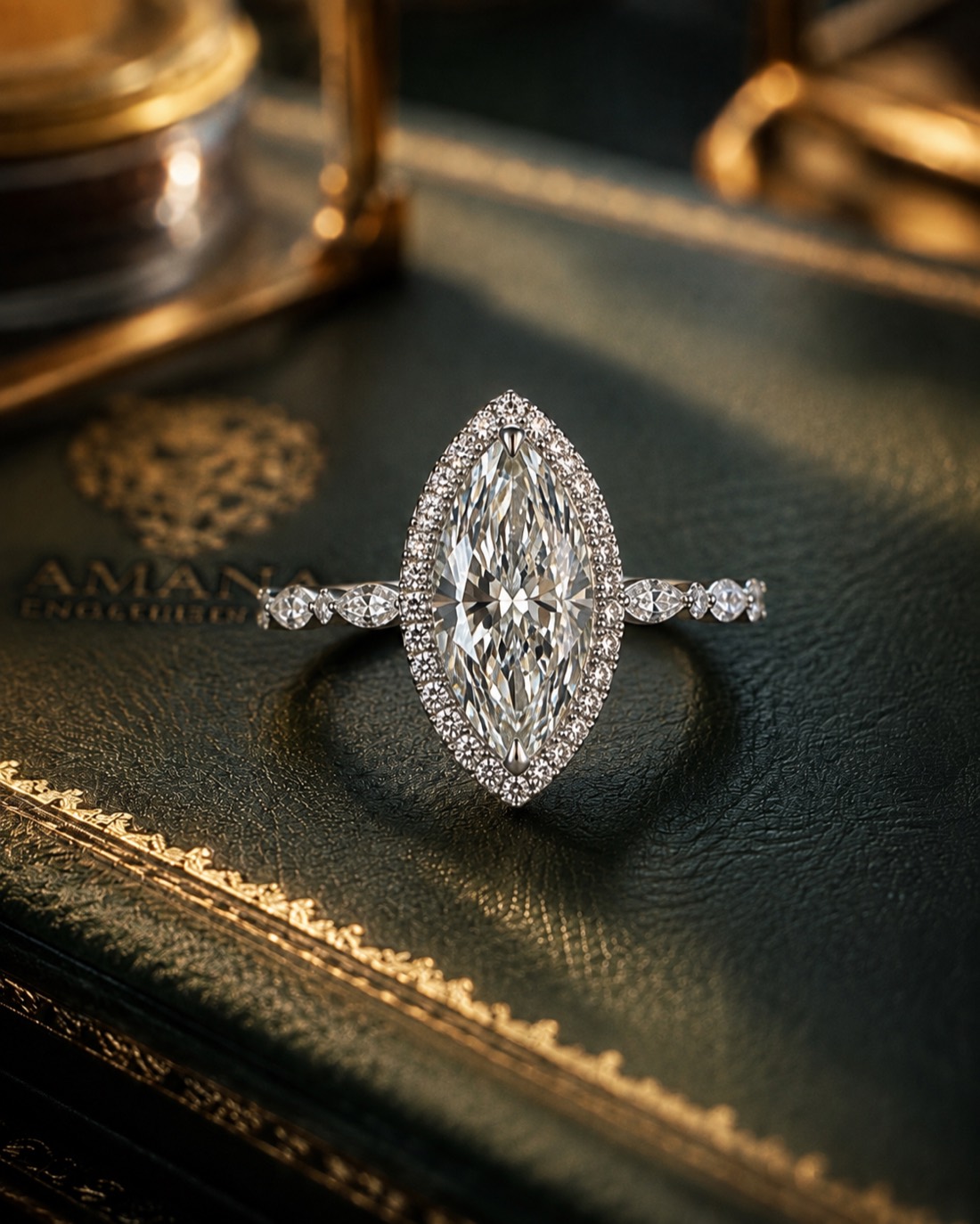
How a channel setting works
For the full picture of how a setting decision like this fits into your overall design, our complete guide to designing a custom engagement ring is worth a look. In a channel setting, diamonds are set into a "channel" carved or built into the metal band, held in place by the metal walls on either side rather than individual prongs on top. This creates a smooth, uninterrupted line across the top of the stones, with no metal prongs sticking up to catch on clothing or hair.
Channel settings are most commonly used for:
- Rows of smaller accent diamonds along an engagement ring's band
- Diamond wedding bands meant to sit flush against an engagement ring
- Any design where a smooth, low-profile line of sparkle is the goal
Why people choose channel settings
Stone protection. Because the diamonds sit recessed between metal walls rather than raised on prongs, channel-set stones are less likely to snag on fabric, hair, or other objects during daily activities.
A clean, streamlined look. The absence of visible prongs gives channel-set rings a smooth, modern, low-profile appearance that pairs well with a wide range of styles, from classic to contemporary.
Practical for active lifestyles. If you work with your hands often or lead an active lifestyle, channel settings are one of the more snag-resistant options for accent stones, since there's nothing raised to catch.
A good fit for wedding bands. Channel-set bands sit flush and comfortable against most engagement ring styles, which is part of why they're such a common wedding band choice.
Trade-offs to understand
Harder to resize. Because the diamonds run continuously along the band, resizing a channel-set ring (especially if the channel wraps most of the way around) can be more limited or costly than resizing a ring with stones only at the top.
Repairs can be more involved. If a stone needs to be replaced or the channel needs repair, the work often requires more precision than simple prong repair, since the metal channel itself has to be reopened carefully.
Less light enters from the sides. Compared to a prong setting, which exposes more of the stone to light from multiple angles, channel-set stones can have slightly less brilliance from certain angles because more of the stone's sides are covered by metal.
Debris can collect in the channel. The recessed design means lotion, soap, and everyday grime can build up in the channel over time, so these rings benefit from regular cleaning.
Channel setting vs. other setting styles
- Vs. prong setting: Prongs expose more of the stone to light (often more brilliance) but leave the stone more exposed to snagging; channel settings trade a bit of light exposure for better protection.
- Vs. pavé: Pavé uses small beads or prongs to hold many tiny stones close together over a domed or flat surface; channel setting holds stones in a straight line between two metal walls. Pavé generally shows more total sparkle across a wider surface, while channel setting gives a cleaner, more architectural line.
- Vs. bezel setting: A bezel fully or partially surrounds a single stone with a metal rim; channel setting is specifically for a row of multiple stones, not a single center stone.
Frequently asked questions
Are channel-set diamonds more secure than prong-set diamonds?
In terms of snag resistance, generally yes, since there's no raised metal to catch on things. However, both styles can securely hold a diamond long-term with proper craftsmanship and maintenance.
Can a channel-set ring be resized?
Often yes, but it depends on how far the channel extends around the band. A channel that only spans the top portion resizes more easily than one that wraps most of the way around.
Is channel setting a good choice for an engagement ring's center stone?
It's uncommon for a center stone specifically, since channel setting is designed for a row of similarly sized stones rather than showcasing one larger, dominant diamond. It's far more common for accent stones and wedding bands.
Do channel-set rings need special cleaning?
They benefit from more frequent cleaning than some other settings, since debris can collect in the recessed channel between stones over time.
What's the difference between channel setting and a full eternity band?
A channel-set band can have diamonds partway around or all the way around; "full eternity" specifically describes complete coverage around the entire band, which can use a channel, prong, or other setting method.
So where does this leave you?
If a clean, snag-resistant line of sparkle matters more to you than maximum brilliance from every angle, a channel setting is a proven, durable choice — especially for a wedding band or accent stones. It's worth weighing the resizing trade-off if your ring size might change over time.
Designing with channel settings at Amana
Whether you're looking at channel-set accent stones for your engagement ring's band or planning a matching wedding band down the line, this is exactly the kind of detail worked out during your Amana design consultation — you'll see it rendered in CAD before it's made, so there are no surprises about how the finished channel will actually look and catch light. Our guide to pairing your ring and wedding band is a natural next read if you're planning both together.
Design-plus-craftsmanship projects at Amana run $1,500–$4,000, and accent details like channel-set bands are typically well within that range — more complex or heavily stoned designs can run higher. If you want to talk through what questions to ask before committing to a setting style, our jeweler questions guide is a helpful companion, and reaching out directly gets you specific answers for your design.