Engagement Ring Metals Compared: Platinum, White Gold, Yellow Gold & Rose Gold
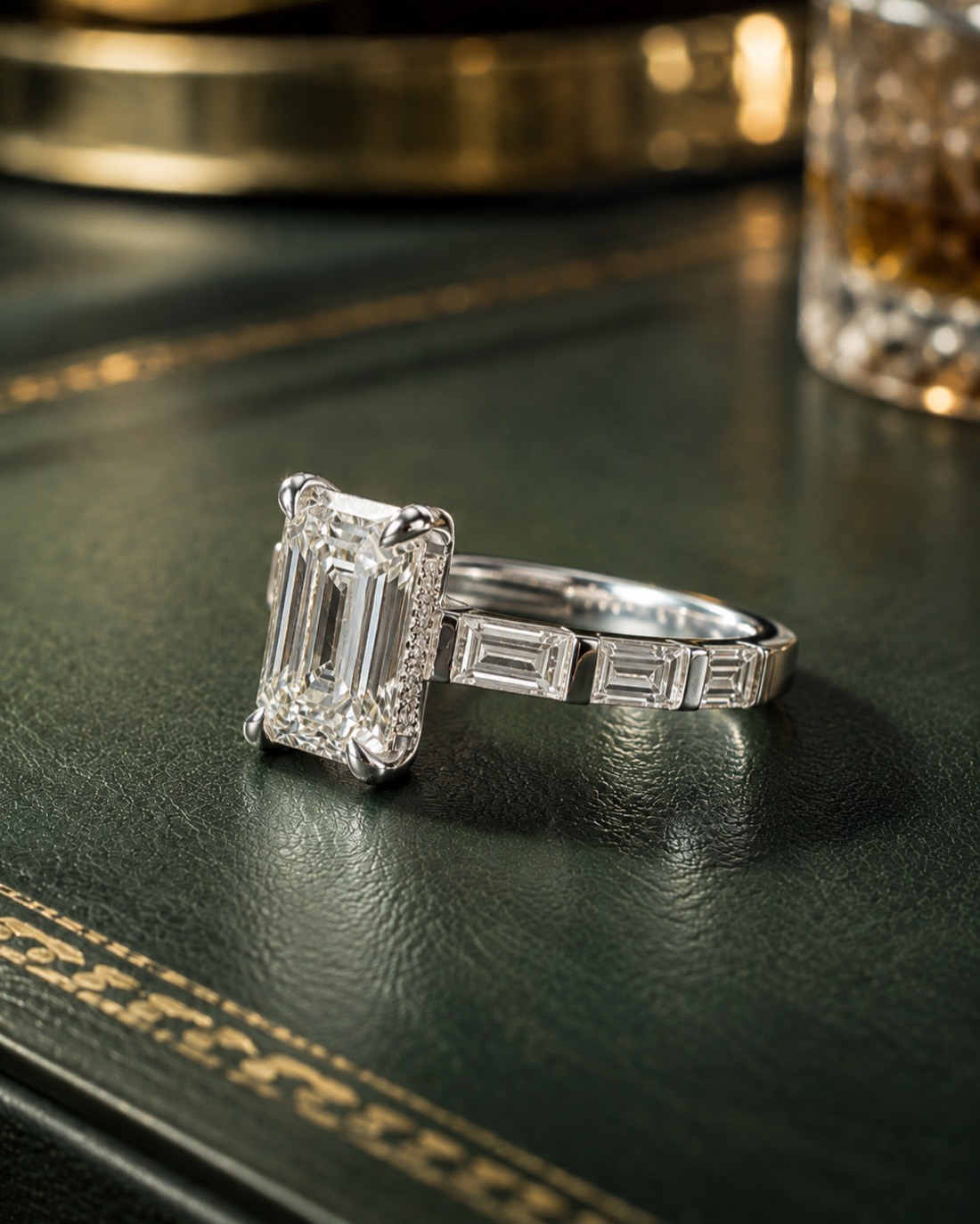
Metal is decision four of seven in our complete guide to designing a custom engagement ring — worth reading if you're starting from scratch.
Platinum
- Look: Naturally white, with a slightly grayer, denser sheen than white gold
- Durability: The most durable option — it doesn't wear away, it displaces, so scratches develop a soft patina many people like (or it can be re-polished)
- Maintenance: Very low — never needs replating
- Allergies: Naturally hypoallergenic, ideal for sensitive skin
- Price: The most expensive metal option, generally 40-50% more than gold by weight, due to its rarity and density
White Gold
- Look: Bright white, achieved by alloying yellow gold with white metals (like palladium) and finishing with a rhodium plating
- Durability: Durable, but the rhodium plating wears over time and needs to be reapplied every 1-2 years to keep that bright white look
- Maintenance: Moderate — periodic replating required
- Allergies: Alloy metals (often nickel in lower-quality white gold) can trigger sensitivity in some people — ask what alloy is used
- Price: Less expensive than platinum, more than yellow gold at the same purity
Yellow Gold
- Look: The classic, warm gold tone people picture with "traditional" engagement rings
- Durability: Softer than platinum at the same purity level, but very long-lasting with normal care; doesn't require replating
- Maintenance: Low — occasional cleaning and polishing
- Allergies: Higher purity (18k+) is naturally more hypoallergenic than lower-purity alloys
- Price: Generally the most budget-friendly precious metal option
Rose Gold
- Look: A warm pink-toned gold, created by alloying gold with copper
- Durability: The added copper actually makes rose gold slightly harder and more scratch-resistant than yellow or white gold
- Maintenance: Low — no replating needed
- Allergies: Copper content can be a consideration for those with copper sensitivities
- Price: Comparable to yellow gold at the same purity
How to actually choose
Instead of picking a metal because it's trendy, work backward from three questions:
- What does your partner already wear? Look at their existing jewelry — most people have a clear, consistent preference for warm (gold/rose gold) or cool (platinum/white gold) tones.
- How hands-on is their job or lifestyle? Platinum and rose gold hold up best to daily wear and impact. White gold needs more upkeep if it's getting knocked around constantly.
- Any skin sensitivities? Platinum and high-purity gold are the safest bets for sensitive skin.
Frequently asked questions
Is platinum really worth the extra cost over white gold?
If long-term low maintenance and hypoallergenic properties matter to you, yes — you'll never pay for replating. If budget matters more and you don't mind replating every couple of years, white gold gets a nearly identical look for less.
Does rose gold go out of style?
Rose gold has stayed consistently popular for over a decade rather than spiking and disappearing like a true trend — it's a safe long-term choice.
Can you mix metals in one ring?
Yes — two-tone settings (for example, a white gold band with yellow gold prongs) are increasingly common and can be fully custom-designed.
Which metal holds a diamond most securely?
Platinum's density makes it especially secure for prong settings, though well-crafted settings in any of these metals will hold a diamond safely with proper prong maintenance over time.
So what does this actually mean for choosing your metal?
The "best" metal isn't a universal answer — it's whichever one matches your partner's actual taste and daily life, at a price point you're comfortable with. The bigger cost driver, though, isn't which metal you pick. It's who you're buying it from.
Where metal choice actually gets expensive (or doesn't)
At a retail store, metal upgrades are often used as an upsell — moving from white gold to platinum can add hundreds or thousands of dollars in markup that has little to do with the actual material cost difference. When you design your ring directly with a designer, metal choice is priced transparently as part of the build, not used as a pricing lever to push you toward the most expensive option.
At Amana, every metal option — platinum, white gold, yellow gold, or rose gold — is part of the same honest design-and-craftsmanship pricing, typically $1,500–$4,000 depending on your stone and design complexity (we'll always explain any variation upfront). You're choosing your metal because it's right for you and your partner, not because a sales floor is nudging you toward the highest-margin option. And because we're building your ring from scratch around a real diamond, not marking up an off-the-shelf setting, you get real material without retail's hidden upsell math.
Book a free design consultation and try out metal tones side-by-side with AI-assisted visuals before you commit to anything — no pressure, no upsell script.