What Does a $10,000 Engagement Ring Actually Buy You?
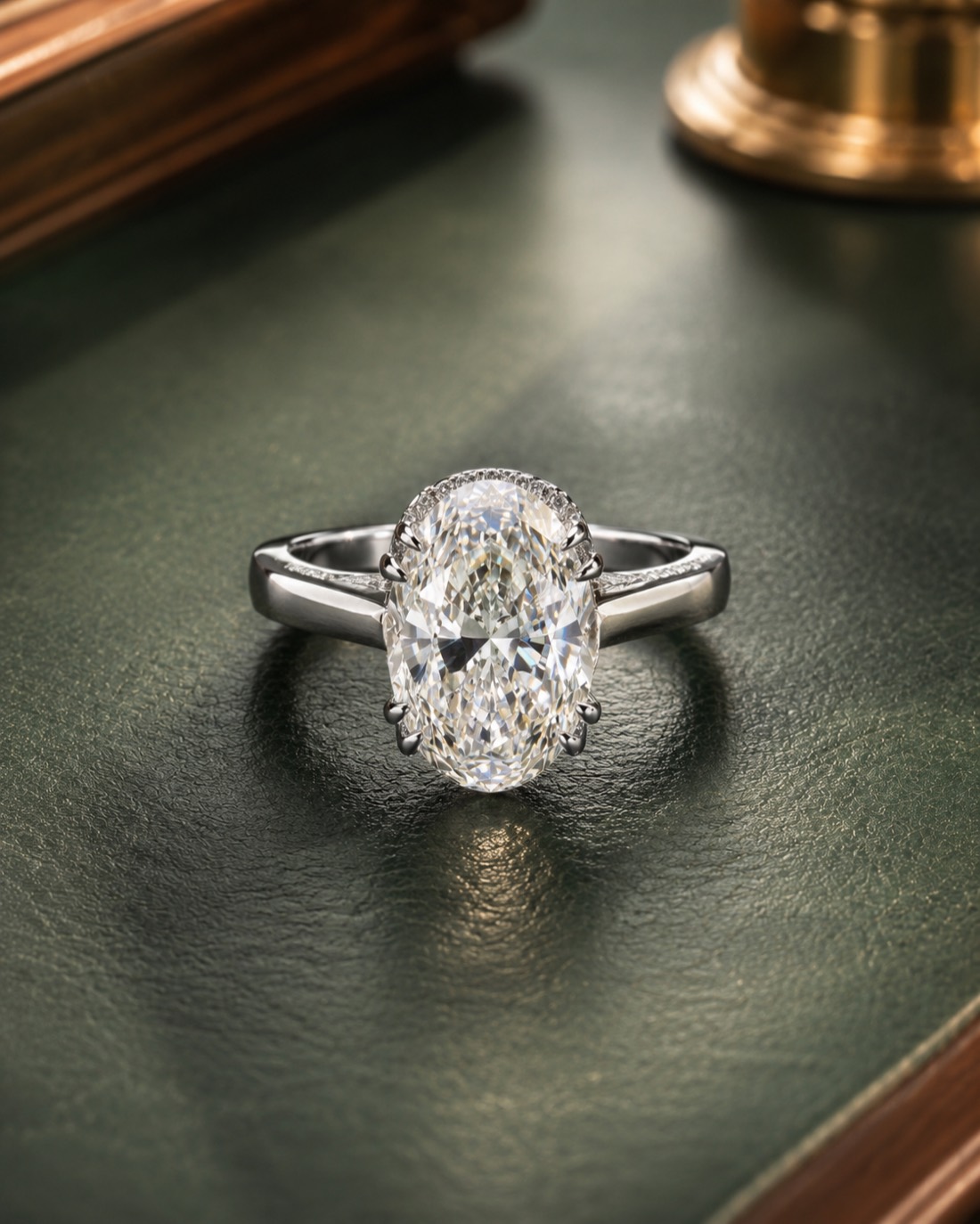
At $10,000, you're past "budget ring" territory and into a range where real choices open up: bigger stones, better cut quality, and design details that would've been off the table at $3,000 or $5,000. But this is also where the type of seller you choose starts to matter more, not less — because the spread between what a $10,000 ring can look like from a mall chain versus a designer-direct studio is enormous.
What $10,000 Buys in Diamond Size and Quality
Money at this budget typically goes toward the diamond first, since it's usually 60-70% of total cost.
- Lab-grown diamonds: roughly 1.5 to 2.5 carats at very good to excellent cut, VS clarity or better, G-H color or better.
- Natural diamonds: roughly 0.75 to 1.25 carats at similar quality, since natural stones cost significantly more per carat than lab-grown at the same specs.
- Fancy shapes (oval, cushion, radiant) generally stretch the budget further per visual size than round brilliants, which carry a premium for cutting difficulty and demand.
What $10,000 Buys in Setting and Metal
Once the stone is chosen, remaining budget covers the setting:
- Platinum costs more than gold per gram and is denser, so a platinum setting eats more of the budget than the same design in 14k gold.
- Halo and pavé settings add labor and small accent stones, which can add several hundred to a couple thousand dollars depending on how much diamond coverage is involved.
- Custom engraving, filigree, or milgrain detail are typically smaller add-ons — often a few hundred dollars — but they add up if you stack several.
Where the Same $10,000 Can Look Completely Different
This is the part that surprises people: two rings that cost exactly $10,000 can have wildly different diamonds inside them, because the seller type determines how much of that money goes to the stone versus overhead.
- Retail jewelry chains carry high markups to cover large storefronts, national advertising, and inventory costs — often meaning a smaller or lower-quality stone for the same price.
- Local independent jewelers usually have lower overhead than national chains, which can mean a somewhat better stone for the money, though pricing still varies a lot by shop.
- Designer-direct studios cut out prebuilt inventory and retail overhead almost entirely, so more of the budget goes directly into the stone and craftsmanship.
Is a $10,000 Ring "Enough"?
There's no rule that says a proposal needs a $10,000 ring — plenty of meaningful proposals happen well below that number. But if $10,000 is genuinely within your means and you want a stone with real size and presence, this budget comfortably supports that goal without requiring corners to be cut on cut quality or clarity.
Frequently asked questions
Is $10,000 a reasonable amount to spend on an engagement ring?
It's a personal financial decision with no universal "right" number — some couples spend far less, others more. $10,000 is well above the median U.S. engagement ring spend and supports a larger stone or more design detail than a typical budget.
Should I prioritize carat size or cut quality at this budget?
Cut quality affects how much a diamond sparkles more than any other factor, including carat weight. Most buyers get more visual impact from a slightly smaller, excellently cut stone than a larger one cut for weight retention.
Does a $10,000 ring need to be a natural diamond?
No. Lab-grown and natural diamonds are chemically identical; lab-grown diamonds simply cost less per carat, which at this budget usually means noticeably more size or quality for the same price.
What percentage of $10,000 should go to the diamond versus the setting?
There's no fixed rule, but 60-75% toward the stone is a common range, leaving the rest for metal, setting style, and any detail work.
So Where Does This Leave You?
You now know what a $10,000 budget can realistically buy — but the math above assumes you're paying retail markup, retail overhead, or both. The honest question isn't "what can $10,000 buy," it's "who should I hand that $10,000 to."
Why This Is Where Amana Fits In
This is exactly the gap Amana was built to close. Instead of paying for a finished ring sitting in a display case — where a chunk of your $10,000 covers the store's rent, staff, and markup — you sit down with a designer, describe what you want, and that same budget goes almost entirely into the stone and craftsmanship of a ring built specifically for her.
To be direct about the numbers: most Amana designs run $1,500-$4,000 total for design and craftsmanship, with larger or more complex stones — including the kind of 1.5-2.5 carat range discussed above — running higher depending on size and detail. A $10,000 budget goes a long way further here than it would buying a comparable finished ring at retail (roughly $12,000) or even jeweler pricing (roughly $8,000), because you're paying for design and craftsmanship directly rather than a markup stack.
The process: you meet with a designer (in person or virtually), use AI-assisted visuals to see the concept take shape in real time, get a CAD file about 3 days later, approve it and pay the balance through an email link, and pick up the finished ring roughly 2 weeks after approval. If you want to see exactly what a budget like this can look like for your ring, get in touch and we'll walk through it together.