Platinum vs. White Gold: Is the Upgrade Worth It?
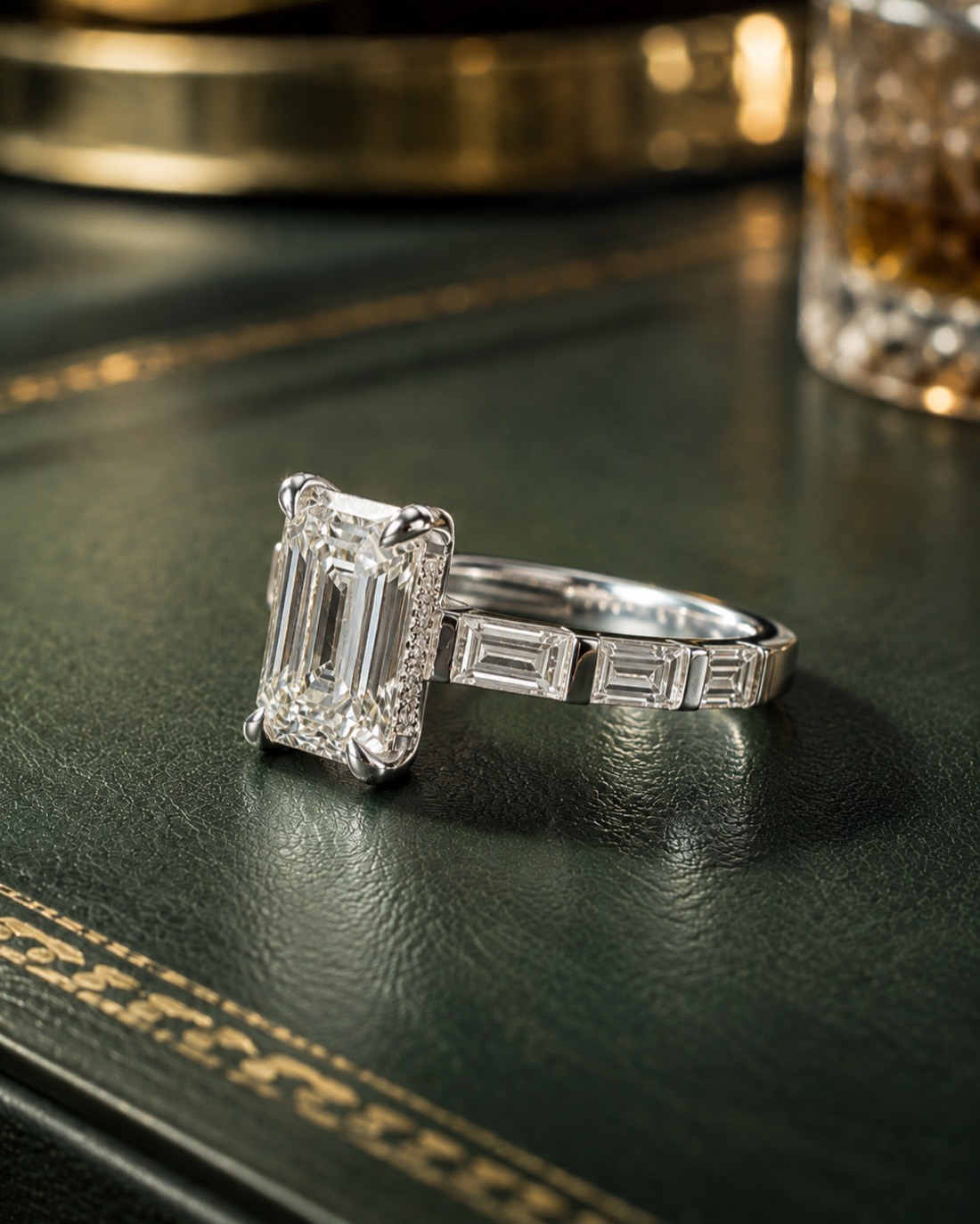
This is decision four of seven — metal — in our complete guide to designing a custom engagement ring.
What each metal actually is
White gold doesn't exist in nature. Gold is yellow. To make it white, it's alloyed with white metals — usually palladium, nickel, silver, or zinc — which lightens the color considerably but not entirely. The result is a gold that's a bit warm and slightly grayish on its own.
So virtually every white gold ring sold is plated with rhodium, a bright white metal in the platinum family. That plating is what gives white gold its crisp, mirror-white look. It's a microns-thin layer on the surface.
14k white gold is 58.5% gold; 18k is 75%. Higher karat means more gold, which means a slightly warmer base color under the plating and a slightly softer metal.
Platinum is an element. Jewelry platinum is typically 95% pure — far purer than any gold alloy — and it's naturally white all the way through. Nothing is plated onto it. What you see is the metal.
It's also considerably denser. A platinum ring weighs noticeably more than the identical ring in gold, which most people register as feeling substantial and expensive.
How each one wears — the real difference
This is the part that actually decides it.
Gold sheds when it's scratched. Scratch a gold ring and a tiny amount of metal is removed. Over decades of daily wear, a gold ring slowly loses material, and thin areas — prong tips especially — thin further. It's slow, but it's subtractive.
Platinum displaces when it's scratched. Platinum is soft but extremely dense and ductile, so a scratch pushes metal to the side rather than removing it. Almost nothing is lost. Over years those thousands of tiny displacements build into a soft, satiny surface called a patina — the ring stops being mirror-bright and takes on a muted, slightly gray glow.
People are genuinely split on the patina. Some love it and consider it the whole point; a platinum ring looks like it's been somewhere. Others want the mirror finish and find the patina looks dull. It's not a defect and it's not damage — and if you don't like it, a jeweler can polish it back to bright, though polishing does remove a little metal.
The practical consequence: because platinum doesn't lose material, platinum prongs last dramatically longer than gold prongs. That's why plenty of white gold rings are built with platinum prongs.
Maintenance, in real terms
White gold needs rhodium replating roughly every one to two years for a ring worn daily, more often if she's hard on her hands, less if the ring lives a gentle life. When the plating wears, the ring doesn't turn ugly — it just gets slightly warmer and grayer, most visibly on the back of the shank where it rubs her finger. Replating is a routine, inexpensive service, but it's a trip to a jeweler and a day or two without the ring, forever.
Platinum needs no replating. Ever. There's nothing on the surface to wear off. If you want the mirror shine back, you get it polished, which is optional and driven by taste rather than necessity.
Over thirty years, that's roughly twenty replating appointments versus zero. Whether that matters depends on how much a recurring errand bothers you.
Cost
Platinum is the most expensive of the two, for two stacked reasons. The raw material is priced higher per gram at jewelry purity, and a platinum ring uses more grams because platinum is much denser — the same ring simply weighs more. Platinum is also harder to work, requiring higher temperatures and more finishing labor, so bench time costs more.
Add it up and the same ring design in platinum typically runs meaningfully more than in 14k white gold. It's a real difference, not a rounding error.
Worth naming honestly: over a lifetime, that gap narrows some, because white gold accrues replating appointments and gold prongs need retipping sooner. It doesn't close entirely. But platinum is less of a pure splurge than the sticker suggests.
Skin, allergies, and comfort
Platinum is hypoallergenic. It's 95% pure and inert, and reactions are essentially unheard of.
White gold is more complicated. Some white gold alloys use nickel, and nickel allergy is one of the most common metal sensitivities there is. While the rhodium plating is intact, there's no contact with the alloy underneath — but when the plating wears through, the alloy touches skin, and someone with a nickel sensitivity can develop irritation right where the plating thinned. Palladium-alloyed white gold avoids this and it's worth specifically asking which alloy is being used.
If she's ever reacted to costume jewelry, earrings, or a watch back, platinum solves the problem permanently and that alone can justify the cost.
How each metal treats the diamond
Both are white, so both let a diamond read as white — an important point, since a warm metal will make a diamond pick up warmth. If she's chosen a high color grade and wants it to look icy, a white metal setting protects that investment.
One nuance: freshly rhodium-plated white gold is arguably slightly brighter and whiter than platinum, since rhodium is a very reflective white. Platinum is a touch grayer, especially once it has patina. Next to a very white diamond, some people find platinum's slight gray flatters the stone; others find bright rhodium makes everything pop. It's a small difference either way.
Frequently asked questions
Can you tell platinum and white gold apart by looking?
When both are freshly finished, barely — a jeweler might catch platinum's slightly grayer tone. After a year of wear the difference is obvious: platinum has a patina and white gold has either been replated or gone slightly warm.
Does white gold turn yellow?
Not exactly. The rhodium plating wears off and reveals the alloy underneath, which is a warm off-white or light gray rather than yellow. It's most noticeable on the underside of the band. Replating restores it.
Is platinum stronger than gold?
Not harder — 14k white gold is actually harder on the scratch scale. But platinum is far more durable in the way that matters for jewelry, because it doesn't lose material when scratched. Harder isn't the same as longer-lasting.
Should the prongs match the band metal?
Not necessarily, and often they shouldn't. Platinum prongs on a white or yellow gold band are a common, sensible combination — the prongs are the part that wears fastest, so putting the more wear-resistant metal there makes sense and costs far less than an all-platinum ring.
Which is better for someone with sensitive skin?
Platinum, clearly. If white gold is the choice, ask specifically for a palladium-based alloy rather than a nickel-based one.
So where does this leave you?
Choose platinum if you want zero maintenance forever, if she has any history of metal sensitivity, if you like the idea of a ring that visibly ages with the marriage, or if the extra weight in the hand feels right. Choose white gold if you want the brightest possible mirror white, want to put more of the budget into the stone, and don't mind a replating appointment every year or two.
And notice something that ran through this entire article: metal choice isn't just one decision, it's several. Band metal. Prong metal. Alloy composition. Karat. The best answer for a lot of people is a mix — platinum prongs on a white gold band, or an 18k palladium-alloyed white gold for someone with sensitive skin — and none of those are things you can select from a display case.
A finished ring is one metal, one alloy, one karat, decided in advance. Not because anyone's hiding options, but because a store would need every design stocked in 14k white, 18k white, and platinum, times every stone size, and each one is a separate item sitting in inventory hoping to sell. Mixed-metal builds are even further out of reach — nobody manufactures speculative inventory of platinum-pronged white gold rings, because the customer who specifically wants that walks in once a year.
Designing means you can mix, match, and ask why
At Amana we're designers, so metal isn't a stocking question — it's a conversation. Platinum throughout? Platinum prongs on a white gold band to spend the difference on the stone? An 18k palladium alloy because she reacts to nickel? All available, because nothing is made until you've decided.
Here's how it works. We meet in person or over video, and we design the concept with you there, using AI-assisted visuals so you can see the options rather than imagine them. About three days later you get a CAD file — a precise 3D model of your exact ring. If you want the band a little narrower, or the ring to sit lower, or double claws instead of single prongs, you say so and we revise. That's normal and it's usually minor. We keep going until you approve, and then the ring is ready in about two weeks.
Our design and craftsmanship typically runs $1,500 to $4,000, and you end up with a real, certified diamond ring. Larger or rarer stones — or a heavier platinum build, since platinum genuinely costs more in raw material — can run higher. When that's the case, we walk you through exactly why before you commit to anything. No surprises at the end.
For context: a comparable ring at a traditional retail jeweler runs about $12,000. That same finished ring bought wholesale is still around $8,000. We charge for the design and the craftsmanship instead, because that's the actual work.
Amana means "Trust" in Arabic. Earn your trust. Make your ring.