Engagement Ring Cost by Carat: The Price Curve
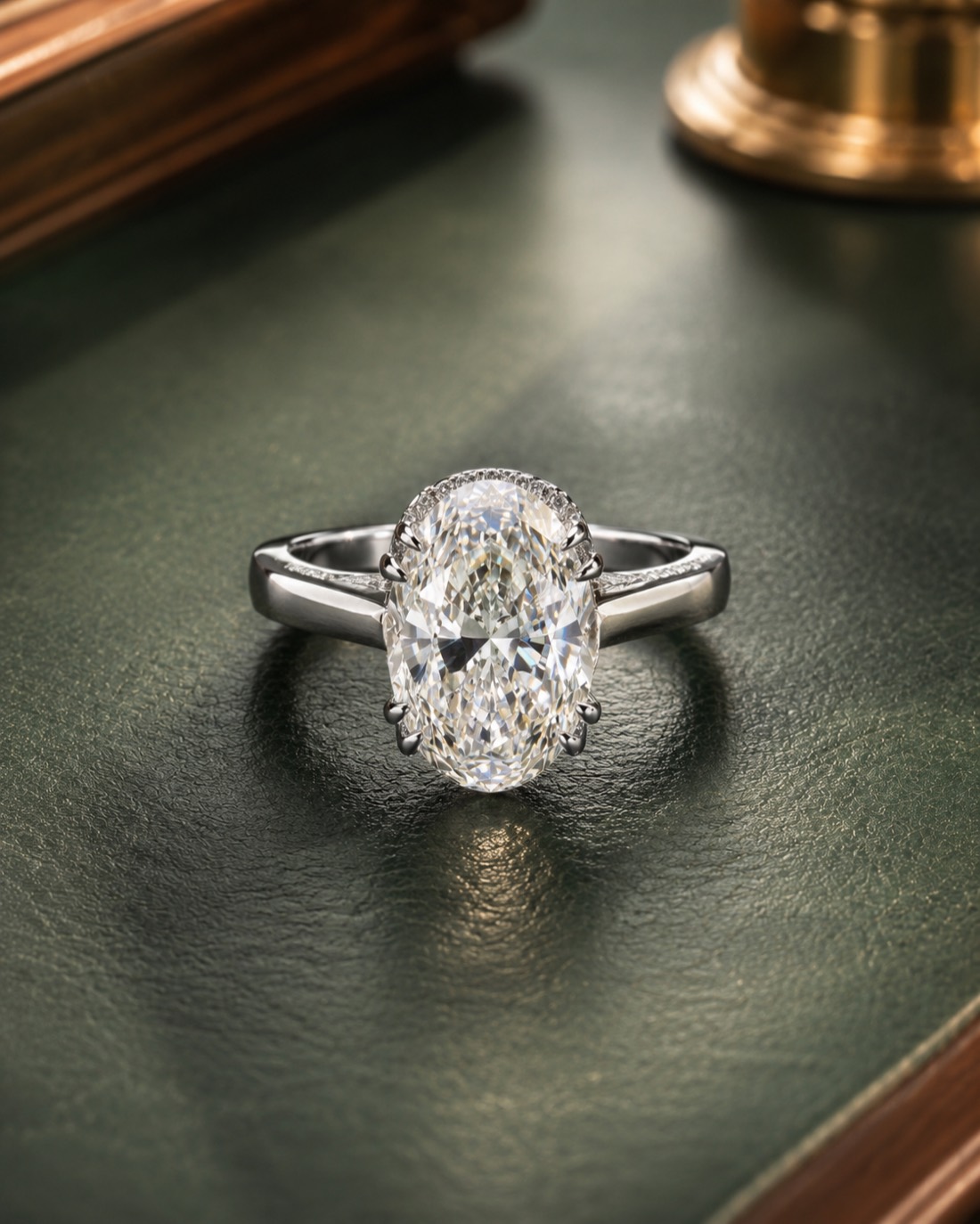
If you've ever compared diamond prices online and wondered why a 1-carat stone is a certain price but a 2-carat stone of the same color and clarity is nearly triple, it's not a pricing error — it's how the math of diamond rarity actually works. Here's the curve, explained simply.
Why the price curve isn't a straight line
Larger rough diamonds are dramatically rarer than smaller ones. For every large, clean rough stone a mine produces, it produces vastly more small ones. That scarcity compounds as size increases, so the price per carat climbs along with the total carat weight — not just the total price.
Two 1-carat diamonds of the same color and clarity don't just cost the same as half of one 2-carat diamond. The 2-carat stone will usually cost noticeably more per carat than the 1-carat stone does, because it's the rarer find. This is why "carat weight" and "carat price" are two different numbers, and why buyers get caught off guard comparing them.
The "magic sizes" where prices jump
Diamond pricing isn't smooth across every hundredth of a carat — it jumps at specific thresholds that the trade has priced around for decades. These are commonly called the "magic sizes":
- 0.50 carat (half carat)
- 0.75 carat
- 1.00 carat (the biggest jump of all)
- 1.50 carat
- 2.00 carat
- 3.00 carat
A diamond weighing 0.99 carats can cost noticeably less per carat than a diamond weighing exactly 1.00 carat — even though the size difference between the two is invisible to the eye. That's because the 1.00-carat stone crosses into a higher pricing bracket the moment it clears the threshold, regardless of how close the smaller stone came.
What this means if you're buying "just under" a magic size
Buying a diamond just below one of these thresholds — 0.90 to 0.95 carats instead of a full carat, for example — is one of the most effective ways to reduce cost without reducing visible size. It looks essentially identical face-up, but it's priced in the bracket below the jump. Jewelers and buyers alike use this deliberately; it isn't a compromise, it's a pricing strategy.
The tradeoff is availability and resale framing — a "just under" stone can be slightly harder to find in specific cuts, and if resale value matters to you, round-number carat weights are sometimes easier to market later. For most buyers focused on how the ring looks and what it costs, that tradeoff is well worth it. If you're still working out how much to allocate to the stone in the first place, our engagement ring budget calculator is a useful starting point.
How shape interacts with the carat curve
The carat curve doesn't apply evenly across every diamond shape. Round brilliant diamonds carry the steepest curve because they lose the most rough material in cutting and are the most universally in-demand shape. Fancy shapes like oval, cushion, pear, and emerald cut tend to have gentler curves — partly because they retain more of the rough stone's weight, and partly because demand for them is more spread out. This is one reason a 2-carat oval and a 2-carat round of similar quality can carry noticeably different price tags, on top of the visual difference in how large each one appears on the hand.
Carat weight vs. how big a stone actually looks
It's worth separating carat weight (a measure of mass) from apparent size (how large a stone looks on the finger), because they don't move together in lockstep. A shallow-cut stone can face up larger than its carat weight suggests, and certain shapes — oval and marquise especially — have more surface area per carat than round stones do, so they read as bigger for the same weight. If your priority is visual size rather than the number on the certificate, it's worth looking at cut proportions and shape alongside carat weight, not carat weight alone. This is also where overall budget guidance matters — our general primer on how much you should spend on an engagement ring covers how to weigh carat size against your total budget.
Frequently asked questions
Why does a 2-carat diamond cost more than double a 1-carat diamond?
Because larger clean rough stones are rarer, the price per carat rises as total carat weight increases. You're paying for both the added weight and the increased rarity of the size.
What are "magic sizes" in diamond pricing?
They're the carat thresholds — 0.50, 0.75, 1.00, 1.50, 2.00, and 3.00 carats — where diamond prices jump noticeably, because the trade prices whole and common fractional weights at a premium over the weight just below them.
Is it worth buying a diamond just under a full carat to save money?
For most buyers, yes. A stone at 0.90–0.95 carats looks essentially identical to a full carat face-up but is priced in the lower bracket, making it one of the simplest ways to reduce cost without a visible size tradeoff.
Does carat weight tell you how big a diamond actually looks?
Not entirely. Cut proportions and shape both affect how large a diamond appears on the hand — a well-cut oval or marquise can look larger than a round diamond of the exact same carat weight.
Do all diamond shapes follow the same price curve by carat?
No. Round diamonds have the steepest carat-based price curve; fancy shapes like oval, cushion, and pear tend to rise more gently, which is part of why they can offer more visual size per dollar at larger carat weights.
So where does this leave you?
Carat weight is one of the biggest levers on your ring's final cost, but it isn't a simple "bigger number, bigger price" relationship — it's a curve with real jumps in it, and knowing where those jumps are can meaningfully change what you pay without changing what the ring looks like. If you want to dig deeper into how carat weight and visual size relate, our carat weight vs. visual size guide and our 1-carat vs. 2-carat diamond comparison both go further into the specifics.
The real question isn't "how many carats can I afford" — it's "where on this curve does my budget land the best-looking stone." That's a conversation worth having with someone who can show you the actual tradeoffs stone by stone, not just a size chart.
Where Amana fits in
This is one of the most common conversations we have during a design consultation — showing a client exactly where their budget lands on this curve, and whether a slightly smaller stone in a better cut, or a "just under" carat weight, gets them a ring that looks and feels the way they pictured it without stretching past what they wanted to spend.
Because we design and produce every ring in-house — no retail markup, no middleman jeweler pricing someone else's work — a fully custom engagement ring from Amana typically runs $1,500–$4,000 total for the design and finished piece, compared to roughly $8,000 through a traditional jeweler or $12,000 at a retail store for comparable work. Larger or higher-carat center stones can push a ring past that range, and we'll always walk you through exactly where your stone sits on the curve before you commit to anything. For a broader look at how "bigger" and "better" relate, see our piece on does a bigger diamond cost more.
If you want to see what your budget actually buys on this carat curve, book a consultation and we'll map it out together.