What Happens After You Approve Your Ring Design?
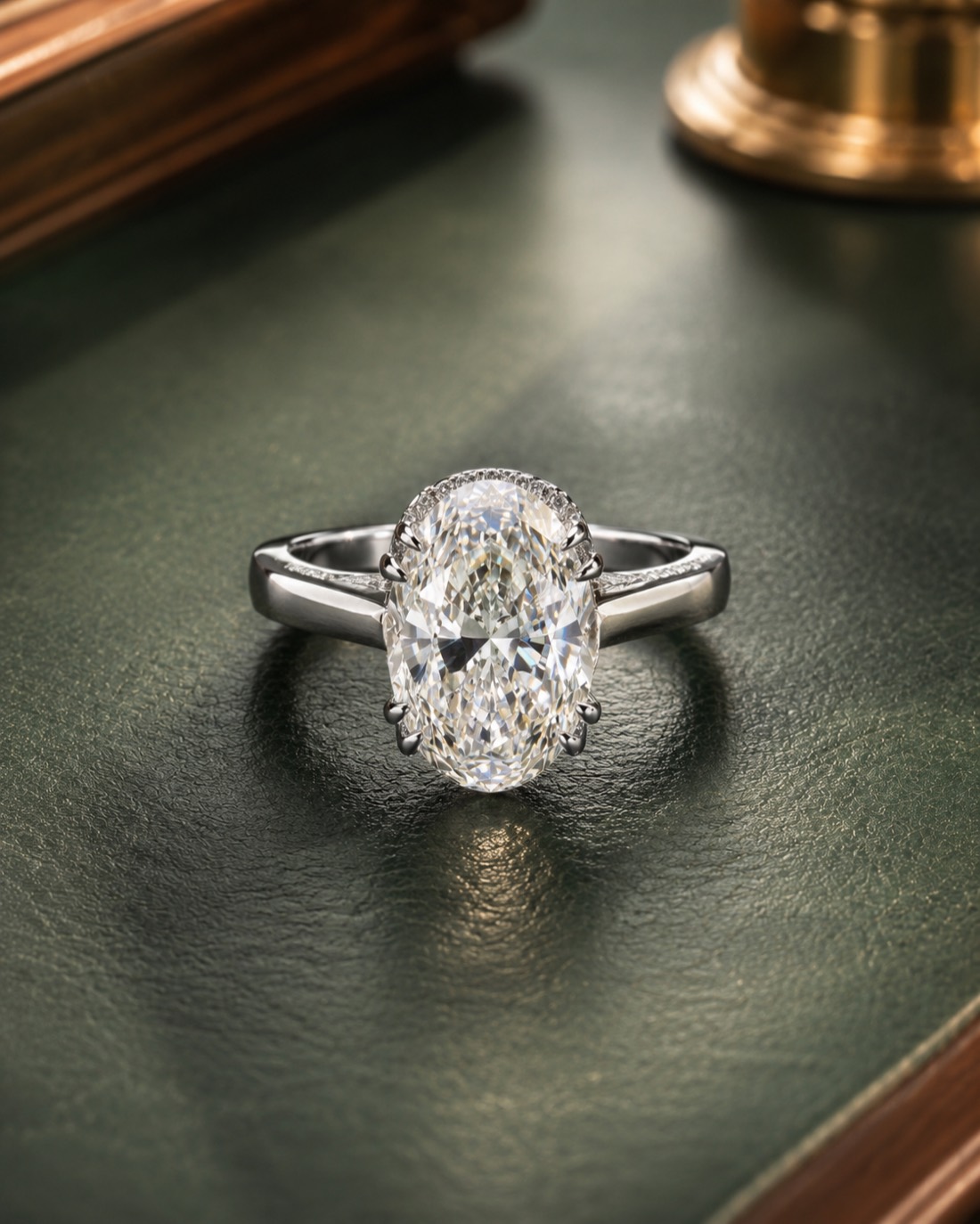
The Build Process, Step by Step
Once you sign off on the CAD file and the balance is paid, here's roughly what happens on the production side, even though most of it happens out of view. This is one stage in a much longer process — for the full picture from first consultation to pickup, see our ultimate engagement ring buying guide.
1. Casting. The approved digital design gets converted into a physical mold, and molten metal — gold or platinum, whichever you chose — is poured to form the ring's basic structure. This produces a rough version of the ring: correct shape and size, but not yet polished or set with stones.
2. Stone setting. A setter places the center stone and any accent stones by hand, using the prong or bezel style specified in your approved design. This is precision work — the stone has to sit at the exact angle and depth the design called for, secured tightly enough to survive decades of daily wear.
3. Polishing and finishing. The ring is polished to bring out the metal's final shine (or matte finish, if that's what you chose), and any final details — engraving, milgrain, texture — are completed at this stage.
4. Quality control. Before the ring ships to pickup, it's checked against the original design: stone security, symmetry, ring size accuracy, and finish quality. This is the last checkpoint before you see it.
5. Pickup. You come in, try it on, and take it home. Some jewelers, including us, ask for a quick sign-off at pickup confirming everything matches what you approved.
Why This Stage Takes the Time It Does
Each step above is genuinely manual, skilled work — not an automated process. Casting has to cool and be cleaned up before setting can start. Setting a stone securely, especially in a detailed design with multiple accent stones, isn't something that can be rushed without risking the stone's security. Polishing by hand takes real time to get a mirror finish without altering the ring's dimensions.
This is also why timelines can shift by a day or two if something in QC doesn't meet the standard — a slightly misaligned prong, a stone sitting a fraction of a degree off. Catching that before pickup, rather than after, is the point of quality control.
What You Can (and Can't) Change at This Stage
Once you've approved the CAD and production has started, changes get more limited and more costly the further along the process is:
- Before casting starts: minor tweaks are usually still possible with minimal delay.
- After casting, before setting: bigger changes (a different setting style, a different metal) usually mean starting the mold process over.
- After setting: changes to the stone or setting typically require some rework, which adds time.
This is a big part of why the CAD approval step matters so much — it's the last easy, low-cost point to change your mind. Once production starts, the ring is being built exactly to that approved file. If you haven't gotten to this stage yet, our guide to what a CAD file actually shows you is worth reading before your first design review.
What to Expect Communication-Wise
A jeweler worth working with should be able to tell you, in plain terms, roughly where your ring is in this process if you ask — not leave you guessing for two weeks. It's reasonable to expect at least one update between approval and pickup, and it's reasonable to ask for one if you haven't heard anything and you're getting close to your target date.
Frequently asked questions
How long does production take after you approve the design?
Typically around two weeks from CAD approval to a finished, ready-to-wear ring, though more complex designs with heavy stone-setting work can take a bit longer.
Can you still change the design after approving the CAD?
Yes, but the cost and delay of a change grows the further production has progressed — a change requested before casting is far easier to accommodate than one requested after the stones are already set.
What if something looks different from the CAD once it's finished?
A CAD rendering is a very close preview, but metal color and stone sparkle look slightly different in person than on a screen — this is normal and expected, not a sign something went wrong. If a structural detail (a missing accent stone, wrong metal) doesn't match, that's worth raising immediately.
Do you need to be present for any part of production?
No — production is entirely on the jeweler's side. You're only needed again at pickup, unless you specifically want updates along the way.
What happens if the ring doesn't fit right at pickup?
A sizing adjustment after pickup is a normal, expected service, not a failure — most jewelers, including us, handle it quickly since the base design doesn't need to change, just the band's circumference. Our ring resizing guide covers what that process looks like and what it typically costs.
So Where Does This Leave You?
The two weeks between approving your design and picking up the finished ring can feel like the longest part of the whole process — you've made the decision, and now you're just waiting. Knowing what's actually happening during that time (and what's reasonable to ask about) makes the wait a lot less stressful, and it's worth choosing a jeweler who's upfront about where things stand without you having to chase them for it.
Where Amana Fits In
At The Amana Method, we design your ring together at your consultation, using AI-assisted renderings so you can see the design before you ever commit to it — not just imagine it from a sketch. Once you approve the CAD and pay the balance, your ring goes into the exact production process described above: casting, hand-setting, finishing, and quality control, all before it reaches you at pickup — typically about two weeks after approval. If you'd rather understand the whole calendar from first consultation through pickup, our engagement ring timeline guide walks through every stage in order, including this one.
Because we're pricing the design and craftsmanship rather than a stone marked up at retail, the full design-and-build typically runs $1,500-$4,000 total. Larger or more complex stones and settings can run past that range — we'll tell you that plainly before you approve anything, not after production has started. For comparison, a similar ring at a traditional retail jeweler tends to run closer to $12,000.
Half the total is paid as a deposit before CAD work begins; the balance is paid through a secure link once you approve the design — no surprise costs once production starts.
Ready to start the process and see your design before it's ever cast? Book your consultation and let's design your ring together.